America After the Midterms: Political Tug-of-War Escalates, How Will U.S. Stocks, Bonds, and the Dollar Move?
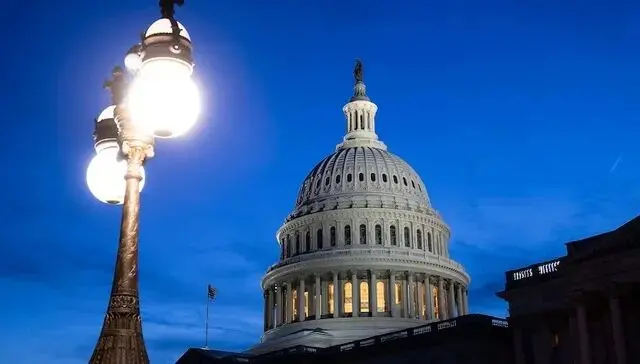
Local time on November 4, 2026, Washington D.C., United States Capitol. Source: Visual China
Interface News Reporter | Liu Ting
The United States 2026 midterm elections were held on November 3 local time. The counting results show that the Democratic Party has won control of both the House and the Senate. This "Democratic control of Congress, Republican control of the White House" divided government pattern means that political uncertainty in the United States has further increased.
Analysts point out that the Democratic Party's significant victory will mainly impact U.S. policy in four areas: major legislation facing a standstill, the Democratic Party controlling the congressional agenda while Trump holds veto power, making it easy for both sides to become deadlocked; congressional oversight and investigations escalating, with the possibility of initiating impeachment proceedings against the president, but the Senate's conviction threshold is extremely high, making successful removal unlikely; personnel and budget facing substantial constraints, with the Senate able to delay or veto Trump's key personnel nominations, and the potential for government shutdowns and debt ceiling disputes to escalate; foreign military policy becoming a new battleground, with the Democratic Party possibly using its approval power over defense spending to pressure an end to the conflict with Iran.
The "midterm elections" are elections for congressional members and local officials held between two presidential elections, often seen as a referendum on the current president's performance. The Republican Party's defeat largely aligns with pre-election polls: Trump's approval rating dropped from about 50% at the beginning of his term to about 39% in October 2026, with high prices and high oil prices being the main reasons for his loss of public support.
The official counting results will be released after each state completes its statistics, verification, and certification, which usually occurs from mid to late November to December. Tight races may be delayed due to recounts or legal disputes. The new Congress will be sworn in on January 3 next year, and the election results will only take effect about two months later.
### Political Tug-of-War Escalates
Analysts point out that with the Democratic Party controlling both chambers and Trump holding veto power, the remainder of Trump's term will present a tug-of-war pattern, mainly unfolding along three lines.
First, in terms of legislation and budget, bills will struggle to pass, and compromises will rely on negotiations; the pressure for a government shutdown will increase.
The U.S. Constitution stipulates that tax and appropriation bills must be introduced in the House of Representatives first, allowing the Democratic Party to control the funding source for the federal government's operations. The current timeline is particularly urgent: the budget for fiscal year 2027 has not yet been passed, and the federal government is operating on temporary appropriations until December 11, with the debt ceiling of $41.1 trillion leaving only about two months of borrowing space at the current level. The Democratic Party does not need to push for grand legislation; it only needs to attach conditions to the appropriations bill that Trump cannot accept—such as extending health insurance subsidies, restoring cut welfare spending, and limiting the president's unilateral power to impose tariffs—putting the government under shutdown pressure.
Luo Zhiheng, chief economist at Guangdong Development Securities, told Interface News that although the government shutdown and debt ceiling disputes may escalate, fiscal tightening is unlikely to occur. The reason is that the new round of tax cuts proposed by the Republican Party may struggle to pass in a Democratic Congress, and the Democratic Party's proposals for tax increases and expanded welfare may also be vetoed by Trump, making it likely that both sides will maintain the current revenue and expenditure framework, with the U.S. deficit rate unlikely to show a significant decline. Additionally, after the IEEPA tariffs were ruled illegal, the government was forced to refund tariffs to businesses, leading to a decline in tariff revenue and further constraining U.S. fiscal space.
Second, in terms of oversight and personnel, investigations will escalate while personnel nominations face obstacles.
After the Democratic Party took control of the House, the chairs of all committees will be held by Democrats, and subpoena power will no longer require coordination from the majority party leader or cross-party consent. Committee chairs can unilaterally compel government officials, presidential confidants, and family business partners to attend hearings and submit documents. According to Politico, Garcia and Raskin, who are expected to lead the House Oversight and Judiciary Committees, have already drafted investigation lists covering Trump's family business interests, cryptocurrency earnings, immigration enforcement controversies, and decision-making processes for military actions against Iran. Compared to 2018, this round is better prepared and emphasizes committee coordination and evidence collection from the private sector.
Luo Zhiheng pointed out that according to the U.S. Constitution, a simple majority in the House can pass articles of impeachment, but the Senate requires a two-thirds majority for conviction. Historically, no president has ever been convicted by the Senate, making impeachment difficult to realize, but its significance lies in consuming the president's political capital and creating momentum for the 2028 election. In terms of personnel, nominations for federal judges, cabinet members, and heads of regulatory agencies require a simple majority confirmation in the Senate, allowing the Democratic Party to delay or even shelve nominations. Unlike in 2018 when the Republican Party still controlled the Senate, Trump's executive power and institutional control may be significantly weakened in the second half of his term.
Third, in terms of foreign affairs and security, external wars and tariffs are expected to face more constraints.
Tariffs, immigration, and foreign affairs still fall under the president's executive authority, and Congress cannot directly stop them, but the Democratic Party can promote war powers resolutions, cut foreign military appropriations, require the president to obtain authorization or withdraw troops under the War Powers Act, and attach conditions to appropriations to limit Trump's unilateral military actions. Specifically, the U.S.-Iran conflict may be forced to shift towards ceasefire and negotiation due to rising risks of dissent within the party; tariff escalation will be constrained by domestic price pressures and Congress's intent to reclaim trade authority, reducing the probability of comprehensive tariff increases, but existing tariffs will not be abruptly removed, instead becoming more regulated and targeted.
Song Xuetao, chief economist at Guotai Junan Securities, told Interface News that observing U.S. public opinion, the war with Iran has not received widespread support within the Republican Party, largely driven by Trump himself and a small group of pro-Israel allies. The reason there was little opposition within the party previously is that Republican candidates tried to avoid contradicting Trump before the midterms to avoid losing the party's primary elections. Now that the midterms are coming to an end, and Trump will not have a third term, if he insists on pushing for a large-scale restart of the war with Iran, he may face risks of dissent within the party, such as from establishment lawmakers.
Everbright Securities pointed out in a research report that overall, the Democratic Party's policy approach after the midterm elections is to prioritize advancing agendas related to living costs and healthcare while initiating oversight investigations into the Trump administration, and then using Congress's legislative and appropriations powers to counter tariffs and the U.S.-Iran war. However, the Democratic Party's attempts to repeal healthcare cuts in the tax cut bill, change tariff authorizations, or pass legislation limiting war may be vetoed by Trump, and overturning a presidential veto requires two-thirds support in both chambers, which means that after the midterm elections, the debate between the two parties on these issues will intensify, increasing political uncertainty.
### How Will U.S. Stocks, the Dollar, and U.S. Treasuries Move?
For the capital markets, the overall impact after the midterm election results are released is shifting from "expansionary pricing" to "regulatory + fiscal constraint pricing."
U.S. stocks will initially trade on "elimination of uncertainty," but the rebound space should not be overestimated. Luo Zhiheng pointed out that since 1950, U.S. stocks have generally been strong in the year following midterm elections, but as of November 3, 2026, the S&P 500 has already risen by 10.6%, which is a relatively good level among all midterm election years, with future performance more dependent on oil prices, the Federal Reserve, and AI realization. Everbright Securities believes that after the Democratic Party regained control of both chambers, regulatory scrutiny on AI data centers, model security, and antitrust issues will heat up, potentially putting pressure on the capital expenditures and valuations of tech giants.
U.S. Treasury rates are expected to trend downward. U.S. Treasuries are the main beneficiaries of the "fiscal constraint" logic: Democratic control of both chambers means that new tax cuts and large-scale spending bills are unlikely to pass, leading to downward revisions in net supply expectations for Treasuries, with long-term rates tending to decline. After the election results became clear, the yield on the 10-year U.S. Treasury fell to around 4.9%, and the two-year yield briefly touched a two-month low.
The dollar may weaken moderately in the short term. Expectations of fiscal expansion cooling will suppress real interest rates and the attractiveness of dollar assets, with the dollar index dropping to around 101.2 after the election situation became clear. Meanwhile, tightening expectations for AI regulation weaken the support of the "U.S. tech premium" for the dollar. However, some strategists warn that if U.S.-Iran negotiations break down and oil prices rebound, inflation and interest rate hike expectations may rise again, thereby supporting the dollar.
Analysts remind that the new Congress members will not officially take office until January 3, 2027, and before that, the current Congress will continue to perform its duties. This transition period is not a power vacuum; rather, it may be a window where policy actions are most concentrated and expectations are most likely to fluctuate, requiring caution regarding "transition period expectation gaps."
Everbright Securities cites an example that Trump may push for the 2027 fiscal year defense authorization bill before the transition, consolidating military-industrial and electoral alliances with long-cycle, high-capital projects like the "Iron Dome" missile defense system and "Golden Fleet" naval expansion, which may temporarily increase expansion expectations and raise supply pressure on U.S. Treasuries, potentially interrupting the downward pace of long-term rates.