FBI pressures to review hacker funds, THORChain and Maya uphold anti-censorship principles: how far can permissionless finance go?
Author: Joel Valenzuela (@TheDesertLynx)
Compiled by: Deep Tide TechFlow
Deep Tide Guide: Following the recent Binance hacking incident, the Federal Bureau of Investigation (FBI) has officially issued a public notice to THORChain node operators, requesting them to conduct on-chain transaction reviews and interceptions of the stolen funds involved. Thus, the global cross-chain DEX protocols have completely differentiated in the face of national power intervention: NEAR Intents and Chainflip have chosen to yield and impose restrictions, while THORChain and its sister protocol Maya Protocol have become the only brave ones in the industry that have not backed down.
However, the tragic struggle cannot hide the stark reality. As a relatively young network with fewer than 120 nodes, THORChain faces not only the potential risk of physical legal crackdowns and node arrests but is also mired in frequent outages and technical difficulties. When regular users churn due to instability, the hacker funds that are barred from centralized finance will quickly push up the proportion of illegal transactions, triggering the "10% Criminal Funds Rule," which could lead to the network being completely blacklisted and isolated by the global formal financial system.
From the imprisonment of the developers of Tornado Cash smart contracts and the permanence of code to the life-and-death struggle of cross-chain liquidity networks with real validating nodes, this storm is forcing the crypto world into a final choice: if integrated liquidity pools are destined to become the focal point of regulation, can true anti-censorship finance only retreat to pure peer-to-peer intent matching and non-integrated liquidity?
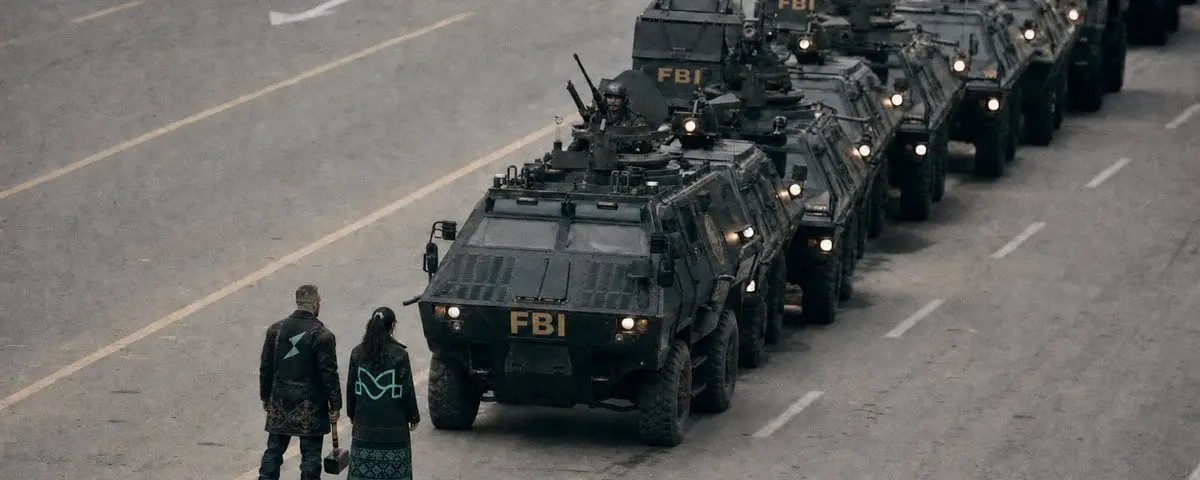
The FBI has formally requested THORChain node operators to assist in reviewing and intercepting suspicious transactions related to the recent Binance hacking incident. We have officially entered a new era where governments and law enforcement agencies are beginning to exert more open and direct pressure on decentralized protocols, forcing them to implement transaction reviews.
For permissionless finance, this has reached a critical moment with no retreat.
Disclaimer: This article discusses the underlying protocol from an academic and technical mechanism perspective. However, it must be clearly recognized that the individuals operating these networks are real people, and those individuals may truly find themselves in legal jeopardy. I do not encourage anyone to put their personal safety and freedom at risk; please prioritize the safety of yourself and your family!
### Should DEXs Take the Blame for Hacking Attacks?
The current crisis originated from hackers (especially attributed to North Korean hacker groups) stealing large sums of money and then using decentralized exchanges (DEXs) to convert these ill-gotten gains into other on-chain assets they prefer to hold.
However, DEXs themselves have not assisted in the theft or illegal transfer of funds. The poor security measures of centralized exchanges (CEXs), the incompetence of law enforcement and regulatory agencies, and the design of the underlying blockchain have all contributed to these thefts. It is completely unreasonable to point the finger directly at DEXs.
Sometimes, gentle wording is not the best way to express a viewpoint. If you prefer to see a raw outburst filled with intense emotions and angry accusations, you might want to watch the video below.
(Related tweet and video link: https://x.com/TheDesertLynx/status/2046665817392030048)
### The Final Bottom Line: Censorship or Perseverance?
As of now, almost all mainstream cross-chain decentralized trading protocols have implemented some form of transaction interception for stolen funds, with NEAR Intents and Chainflip being the most representative. Only THORChain and its sister DEX protocol Maya Protocol have not compromised.
THORChain and Maya Protocol form the last barrier against the industry forming a consensus that "compromise is reasonable" on the issue of transaction reviews. This is the last bottom line drawn in the sand.
If this bottom line is breached, we may have to accept a harsh reality: even if we can have permissionless currency at the base layer, obtaining and using this permissionless currency without going through layers of controlled centralized channels will become nearly impossible. This will severely stifle the upper limits of freedom that so-called free currencies can achieve.
The previous public pressure from the entire crypto industry did not force THORChain and Maya to yield, and now government law enforcement agencies have officially presented their notice. Although the future development is still uncertain, there is every reason to infer that substantial law enforcement crackdowns are imminent: websites and GitHub repositories being taken down and banned, cloud service hosting being forcibly canceled, and even node operators facing arrest risks.
### Lessons from the Past: Insights from the Tornado Cash Trial
In the attack on similar core crypto tools, the U.S. government has previously provided an extremely typical real-world example: Tornado Cash.
Tornado Cash was, and still is, a smart contract on Ethereum that provides privacy protection for any user. Although the contract and its related addresses have been fully sanctioned, and its core developers have been arrested, thanks to the immutability of smart contracts, the underlying contract remains online, and people continue to use it.
If the U.S. government launches a full-scale crackdown on THORChain, we can expect similar results, but there are several key differences that cannot be ignored between the two.
### Legal Pitfalls of Front-End Interfaces: The Essential Differences Between Tornado Cash and THORChain
The founding team of THORChain has previously deliberately avoided directly operating a front-end website for user-initiated exchanges, using a very clear "separation of powers" structure to mitigate legal risks, which is something Tornado Cash failed to do back then. Therefore, the defense argument of "we are merely writing open-source code" would originally be much stronger for THORChain.
However, THORChain has recently deployed its own official exchange front-end interface. This has complicated the entire situation. I am currently not entirely clear about the legal separation between the front-end operating entity and the underlying code developers, but if it comes to a legal battle in the future, these factual details will have a decisive impact.
### The Node Dilemma: Ethereum with No Nodes to Shut Down vs. THORChain with Physical Nodes
An even more critical core difference is that Tornado Cash operates as an immutable smart contract on the Ethereum mainnet. Unless the Ethereum validators, spread across many different jurisdictions and forming a large, stable network, engage in a massive coordinated action, there is no external force that can completely shut it down.
THORChain, on the other hand, has its own independent validating nodes. If external forces want to cut off its operation, they do not need to breach or coerce large underlying main chains like Bitcoin or Ethereum.
### The Most Deadly Path to Censorship: The 10% Criminal Funds Rule
Not long ago, I conducted an in-depth interview with Alex Shevchenko, the head of NEAR Intents, on the highly controversial topic of transaction reviews at decentralized exchanges.
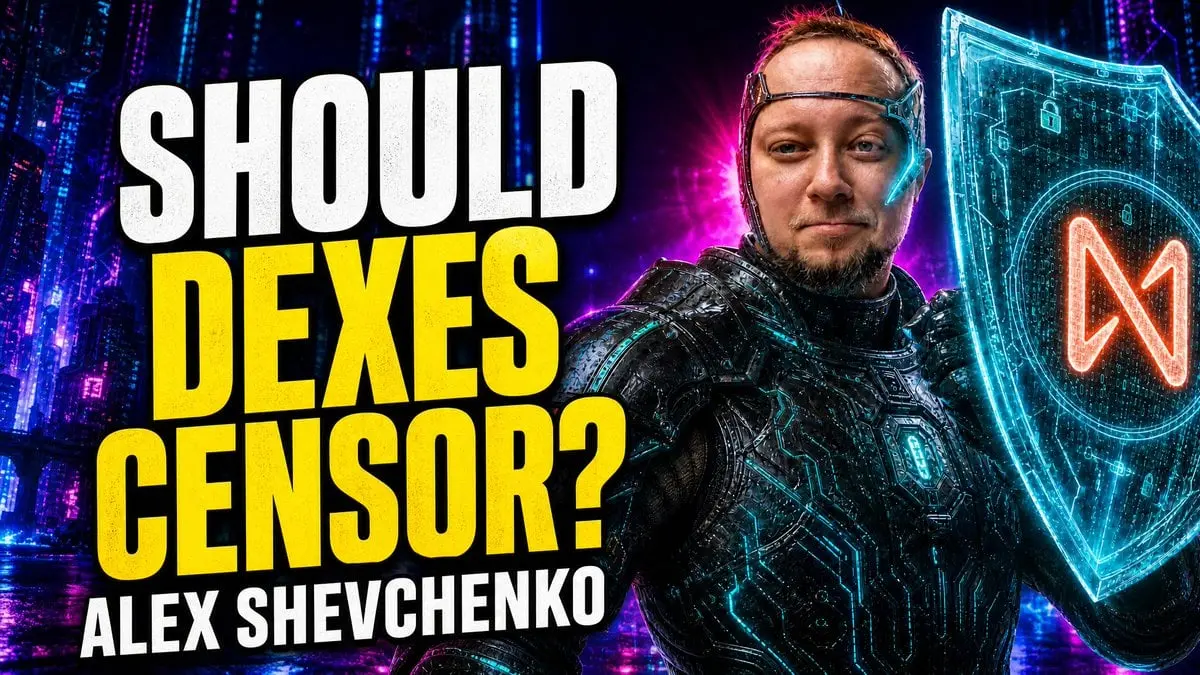
Image: Joel Valenzuela interviews Alex Shevchenko, head of NEAR Intents, discussing whether decentralized exchanges should implement transaction reviews.
(Related interview podcast and video link: https://x.com/TheDesertLynx/status/2115613867934101599)
At the end of that conversation, the most thought-provoking core point was the so-called "10% Rule": whether a protocol can survive and maintain its legal status entirely depends on the balance between its legal and illegal activities.
If 90% of the transaction volume on THORChain comes from legitimate normal users, even if 10% of the on-chain activities stem from hacking and theft, the protocol can still thrive. However, if the balance tips too far toward illegal or criminal transactions, external forces can easily economically besiege THORChain and logically blacklist it as an illegal platform solely for money laundering by criminals.
Once THORChain becomes an isolated island, compliant ordinary users will be too afraid to use it, and even if the network can technically still operate, it will have effectively failed.
If the situation deteriorates to this point, even a user facing the risk of censorship will weigh the pros and cons: is the risk of using NEAR Intents leading to transactions being flagged and frozen by the SHIELD system higher, or is it more dangerous to use THORChain for exchanges at the cost of having their funds completely tainted and permanently unable to be liquidated in the mainstream world?
Therefore, the FBI does not need to physically destroy the THORChain network at the technical level. They only need to blacklist it for comprehensive suppression, and this ecosystem could naturally perish in isolation.
### Facing a Major Threat: Is THORChain Ready for a Direct Confrontation?
Now that powerful regulatory agencies are at the gates, we must ask ourselves: Is THORChain really prepared to face off against the most powerful government machinery in the world?
My candid answer is: I don't know. It might withstand it, or it might not. To be fair, this prospect makes me deeply uneasy, primarily due to two major issues.
### Disparity in Scale: A Fragile Network with Very Few Nodes
Networks like Bitcoin and Ethereum, or those of a certain scale like Solana, as well as the tested Dash, Monero, Zcash, Bitcoin Cash, or Litecoin, may be large enough to maintain online operations and functionality in the face of concentrated government crackdowns.
However, THORChain has fewer than 120 validating nodes, and its historical resilience against risks cannot be compared to the aforementioned established projects, especially as it was on the brink of extinction during the recent bear market.
As an emerging project with a total market value of only about $200 million, resisting unimaginable top-level political and judicial pressure is as difficult as climbing to the sky. This is particularly severe given the many competitors surrounding it, with NEAR Intents occupying an even larger market share.
### Fatal Weakness: Frequent Outages Are the Culprit Driving Away Legitimate Users
This is the elephant in the room that everyone can see but is heartbreaking: THORChain frequently experiences outages.
Downtime is downtime, whether this network outage is due to external government censorship or purely internal engineering challenges. It may not even require the FBI to truly wield the iron fist of state machinery; the network may simply fail to maintain a stable uptime, thus posing no real threat to any vested power.
More critically, poor availability directly undermines the key "10% Rule" I mentioned earlier. If law-abiding users encounter network outages while trading, they will turn to other alternatives and are likely never to return; whereas hackers and illicit funds have no choice but to cling to this platform.
Over time, frequent downtimes will inevitably lead to a significant increase in the proportion of transactions from criminals on THORChain. In my view, if THORChain ultimately fails, this will be the fundamental reason, rather than direct external censorship.
### What if THORChain Falls? Is All Permissionless Finance Lost?
If THORChain falters in this storm, are we all doomed?
The short answer is: the future will be incredibly difficult, but it will not lead to total collapse.
### Holding the Flame: Architecturally Independent, Non-Legal Entity Maya Protocol
THORChain's sister project, Maya Protocol, remains strong. Although it faces many similar underlying architectural limitations, its team's vulnerability is much lower: the team is not based in the United States and has almost no formal legal entity that can be easily targeted by law enforcement.
If THORChain ultimately struggles to survive, I believe Maya will continue to operate, and most members of the THORChain community will simply need to migrate as a whole and shift their core development efforts to Maya. This would undoubtedly be a heavy blow, but the flame will continue to burn.
### The Ultimate Anti-Censorship Form: Peer-to-Peer Intent Matching and Non-Integrated Liquidity
In any field, the ultimate way to achieve the strongest anti-censorship is always through peer-to-peer (P2P).
THORChain is an extremely complex integrated liquidity automation machine that relies on a unified network to process each transaction on demand. Frankly, this is too large and centralized a target for scrutiny in the eyes of regulators.
However, when traders and liquidity achieve complete peer-to-peer interaction, maintaining network operation becomes much easier. Law enforcement would have to take down each independent individual trader one by one around the world, which is physically impossible.
Atomic Swap-type DEXs operate on this mechanism and have strong resistance to external scrutiny. However, their user experience is so poor that they have never accumulated enough significant trading volume, and thus cannot pose a substantial challenge to any centralized power.
If a smooth, intent-based architecture could be deployed to match independent peer-to-peer traders (rather than relying on vetted market makers like NEAR Intents) while maintaining an excellent user experience, this would be the ultimate solution to resist censorship.
In this architecture, there is no need to rely on integrated liquidity pools; exchangers in high-pressure jurisdictions can choose to refuse to trade with suspicious funds, while traders with robust anonymous security protections in regions with lenient compliance policies can continue to operate freely. If no one is currently building this system, now is the time.
History has proven that decentralized sovereign currencies can achieve unbreakable anti-censorship; we have also demonstrated that using these currencies privately is feasible. And now, free trading itself has been put on the chopping block.
Do we have enough courage and resilience to win this final hard battle?