CICC: The Asset Implications of the Democratic Party's "Sweep"
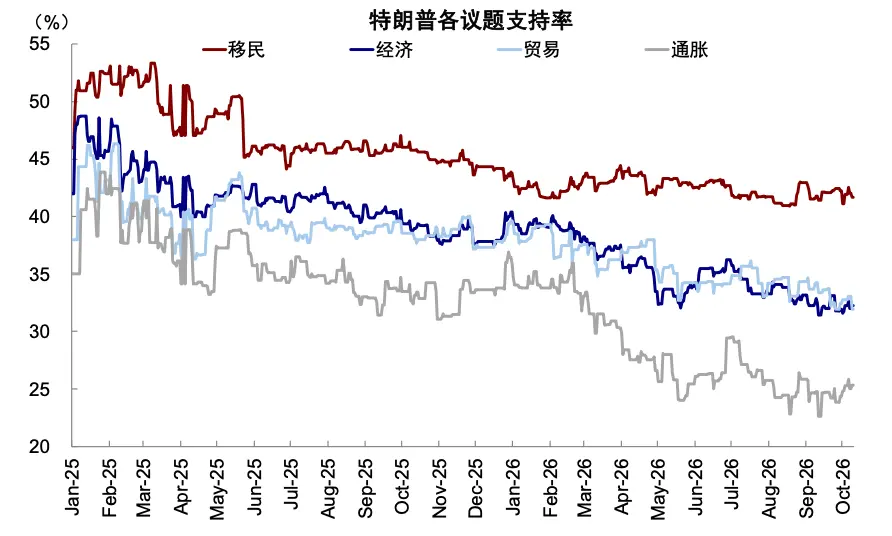
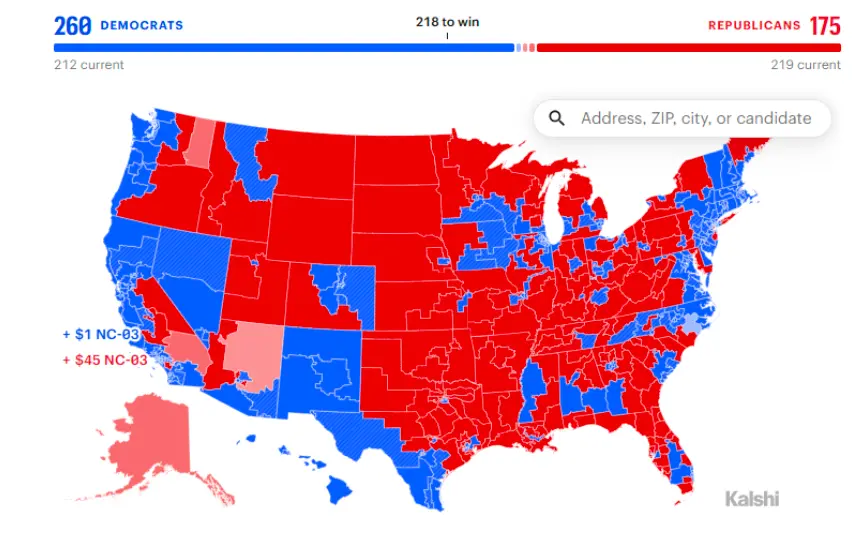
On November 3, the U.S. midterm elections officially took place, and preliminary results indicate that the Democrats are set to sweep, with a "done deal" outcome. According to data from Polymarket, Kalshi, and others, the Democrats are expected to secure 260 seats in the House of Representatives (218 for a majority) and 56 seats in the Senate (51 for a majority) (Chart 2). The prolonged uncertainty regarding the situation in Iran and rising inflation have caused many voters to lose patience, leading to a decline in Trump's approval ratings before the midterm elections, especially since inflation is the issue with the lowest approval ratings (Chart 1).
Chart 1: The prolonged uncertainty regarding the situation in Iran and rising inflation have caused many voters to lose patience
Source: Silver Bullet, CICC Research Department
Chart 2: Market expectations for the Democrats to "sweep" both chambers, securing 260 seats in the House and 56 seats in the Senate
Source: Kalshi, CICC Research Department
The advantage gained by the Democrats clearly exceeds expectations, particularly with some deep red states like Texas turning blue, which is quite surprising. This result has raised concerns in the market regarding Trump's policies being hindered, increased political maneuvering, and heightened regulation of AI and cryptocurrencies. As a result, Nasdaq futures briefly fell by 2%, and both cryptocurrencies and the dollar weakened. However, sentiment quickly rebounded, and the market shifted to trading on the expectation that the Democratic Congress would constrain Trump's "mistakes" in certain policies.
In a situation where there is significant uncertainty regarding policy direction and progress, the market's performance on both sides seems to have justifications. In fact, the impact of different midterm election issues on the same asset could be completely opposite.
From our perspective, the essence of the impact on assets is to determine whether the focus is on correcting existing errors (inflation, the situation in Iran, the Federal Reserve, tariffs) or primarily on "creating chaos" for the sake of opposition (AI, fiscal policy). So what has this midterm election changed? Which directions are more likely for policy advancement? What implications does this have for assets?

How do midterm elections affect policy? Increased political maneuvering, heightened fiscal constraints, and regulatory challenges for AI
To understand the actual impact of the midterms, one must first understand the boundaries and operational mechanisms of power between the U.S. Congress and the President. In short, controlling both chambers of Congress does not equate to being able to "do as one pleases"; there are still many checks and balances and procedural limitations, which lead to the final outcomes being concentrated in several areas.
The powers of the House and Senate have different emphases; simply put, the House "controls money" (budget, taxation, etc.), while the Senate "controls people" (confirmation of presidential nominations). In terms of foreign affairs and trade, Congress has limited influence. However, the Senate has a "special power" called "filibuster," which allows the minority party to extend debate indefinitely, effectively obstructing the passage of legislation. Therefore, if one party only controls a simple majority in the Senate, such as 51 seats, it will still face significant challenges on many important bills. Otherwise, why has the Republican Party, currently holding both chambers, been unable to pass the budget for the 2027 fiscal year (which starts in October) until now? However, controlling 60 seats changes the situation; a relative majority of 60 seats can vote to end a filibuster. Thus, 60 votes represent an important "watershed," as, apart from budget-related bills that can pass with a simple majority through budget reconciliation, most general bills require 60 votes to pass. Additionally, the President has a power known as "veto," which also makes it difficult for the Democratic agenda to be realized.
Combining the results of the midterm elections with the operational mechanisms of congressional power, several points are relatively clear: 1) Trump and his supporters may face investigative pressure. After the 2019 midterms, the Democrats pushed for Trump's impeachment, although it was largely symbolic (requiring a 2/3 absolute majority in the Senate). 2) Fiscal maneuvering will intensify. Implementing the fiscal direction envisioned by Trump for 2027 will be very difficult, as military actions may be affected; however, Trump can also veto areas where the Democrats wish to spend money. During this maneuvering process, the risk of government shutdowns will increase (though it has little substantive impact), and the risk of hitting the debt ceiling will rise (currently estimated to be reached in the second quarter of 2027), but the importance of the debt ceiling means that no one can afford to bear the responsibility for default, so it is likely to remain "more drama than danger." 3) AI regulation will largely depend on local levels, as federal-level legislation is very challenging. Although the overall direction is thus, the actual outcome still depends on the results of the bipartisan maneuvering and the speed of implementation, which remains uncertain.

Fiscal Policy: Intensified maneuvering, difficulty in fiscal expansion; increased disturbances from government shutdowns and debt ceiling risks
Congress holds the "purse strings" of U.S. fiscal policy, which is key to the implementation of fiscal policy and the core area of bipartisan maneuvering. Currently, there are significant differences between the two parties on fiscal issues such as defense and healthcare. Although the Democrats theoretically can bypass the need for 60 votes to end a filibuster through budget reconciliation after controlling both chambers, Trump's veto power can still impose significant constraints on the Democratic agenda, ultimately leading to increased fiscal maneuvering and making implementation very difficult.
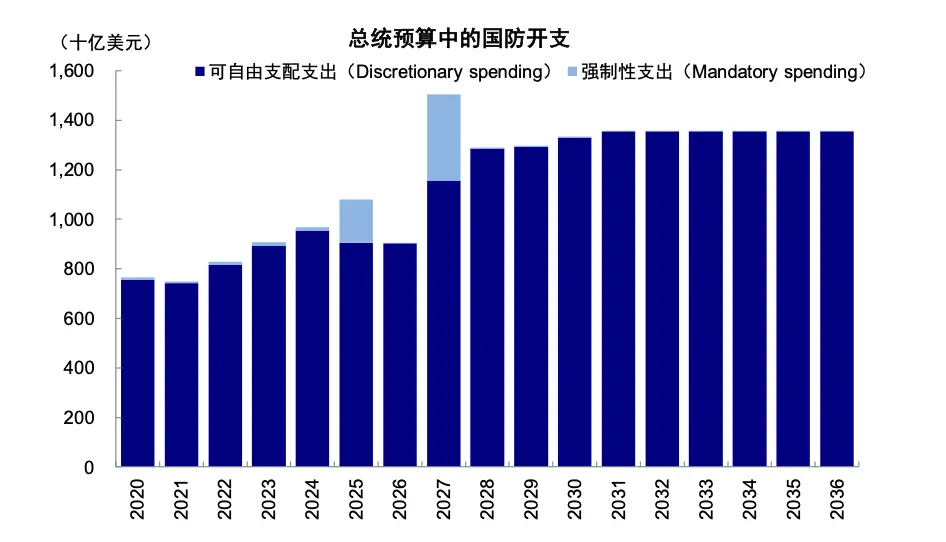
► Republican Party: Fiscal resources tilted towards defense. Trump submitted the 2027 fiscal year presidential budget in April 2026, primarily through annual appropriations and budget reconciliation to implement proposals. According to CBO estimates, Trump plans to increase spending by $117 billion in 2027, with $98 billion directed towards defense (Chart 3).
Chart 3: Defense spending is a major demand of Trump
Source: CBO, CICC Research Department
► Democratic Party: Ending geopolitical conflicts and strengthening social welfare. From the Democratic policy agenda, they advocate restoring healthcare protections (such as the ACA and Medicaid), ending military actions against Iran, repealing tariff policies, lowering living costs, and increasing oversight of Trump, which are clearly different from the policy tendencies reflected in Trump's presidential budget and the "Great Beautiful Act."
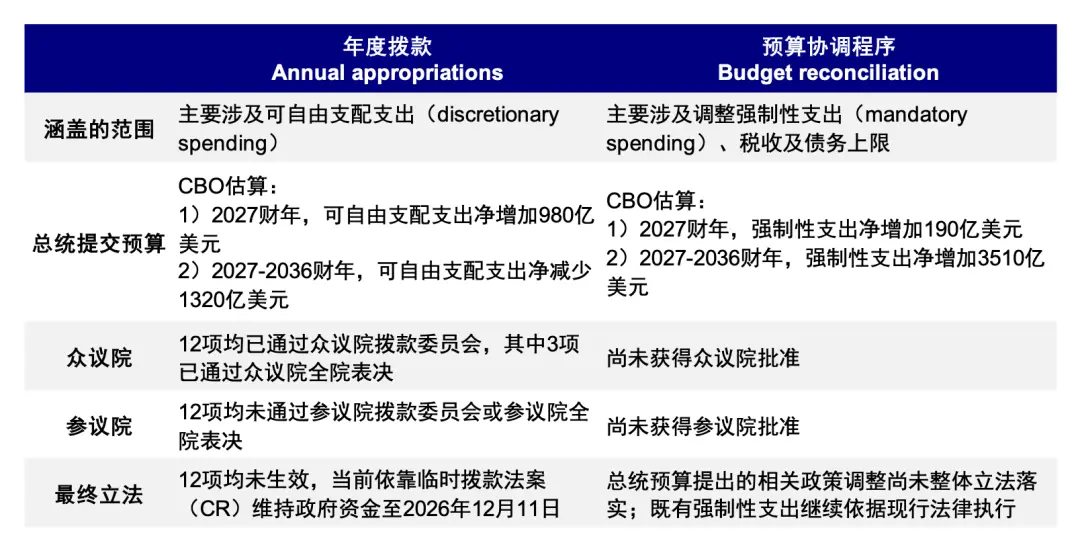
Will the new Congress led by the Democrats affect the 2027 fiscal year? From the end of the midterm elections (November 3, 2026) to the inauguration of the next Congress (January 3, 2027), this period is referred to as the "lame duck session," during which both chambers are still controlled by the Republican Party. If the Republican Party can push through the main annual appropriations and new spending proposals for the 2027 fiscal year during this period (i.e., obtaining passage in both chambers and presidential signature), then even if the Democrats achieve a significant victory in the midterm elections, the impact on the 2027 fiscal year will be limited. However, the legislative progress of the current Congress is lagging, and some fiscal disputes may need to be resolved by the new Congress (Chart 4).
Chart 4: Progress of Trump's annual appropriations and budget reconciliation bills is slow
Source: CBO, CRS, CICC Research Department
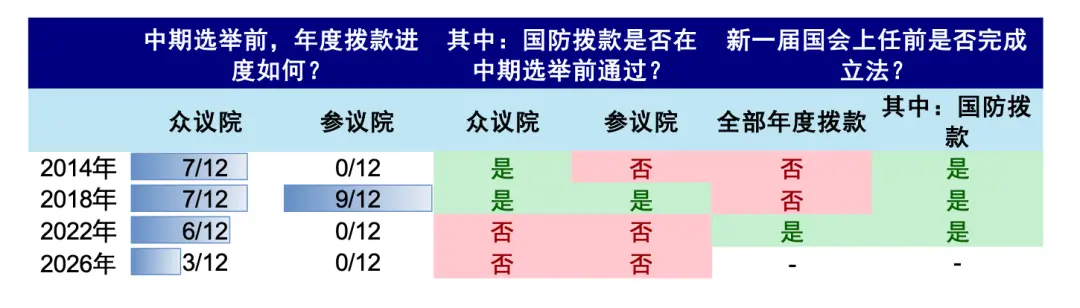
► Annual Appropriations: As of the midterm elections, only 3 out of 12 annual appropriations bills have passed the full House vote, and none have passed the full Senate vote, significantly lagging behind the previous three midterm election years (Chart 5).
Chart 5: Trump's annual appropriations progress lags behind the past three midterm election years
Source: Government Shutdown Tracker, CRS, CICC Research Department
► Budget Reconciliation: Trump hopes to push for the third round of budget reconciliation legislation (Reconciliation 3.0) to fulfill his fiscal demands. However, looking back at the previous two rounds of budget reconciliation, from the passage of the budget resolution in both chambers to signing into law, the "Great Beautiful Act" (OBBBA) took 85 days, and the "Secure America Act" took 42 days (Chart 6). Currently, the budget resolution, which is a prerequisite for Reconciliation 3.0, has not yet been passed by both chambers.
Chart 6: The legislative process for Reconciliation 3.0 is significantly delayed
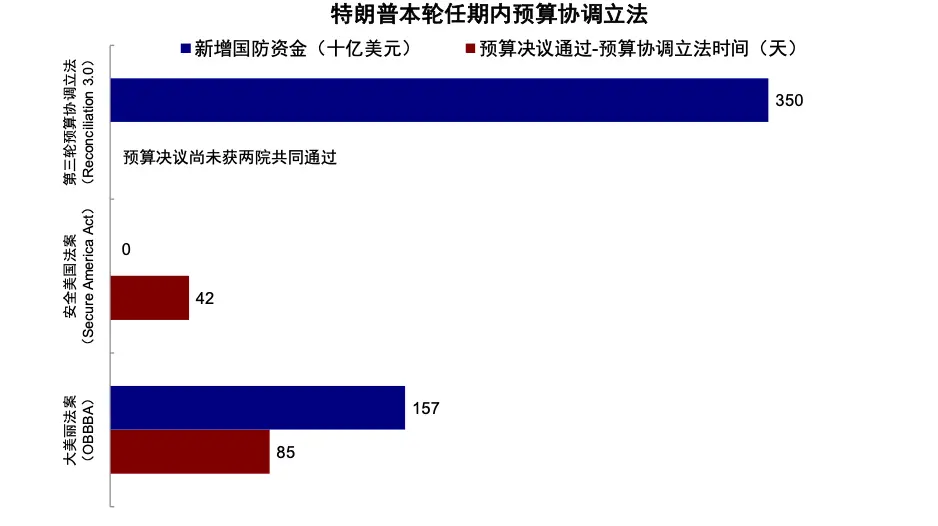
Note: The additional defense funding scale for Reconciliation 3.0 is as proposed by the White House.
As the maneuvering between the two parties over fiscal legislation will intensify significantly, we highlight the increased probability of "government shutdowns" and "debt ceiling" issues.
► Government Shutdown: The likelihood of renewing the continuing resolution (CR) in December is relatively high, but the risk of government shutdowns will increase in the first half of next year. The current Congress has failed to pass the annual appropriations bills before the start of the 2027 fiscal year, and Trump signed a temporary appropriations bill (continuing resolution, CR) on September 2, extending the existing appropriations until December 11. At that time, the new Congress will not yet be in session, and the Republican Party will still control both chambers, so the likelihood of smoothly passing a new CR is relatively high. However, if the new CR extends the appropriations deadline until the new Congress takes office (the average duration of a CR is 118 days), then as the Democrats take control of Congress, the fiscal differences between the two parties may further widen, and the risk of a government shutdown may erupt in the first half of next year.
► Debt Ceiling: We estimate that the U.S. will hit the debt ceiling in the second quarter of 2027, corresponding to reaching the X-date (the day funds run out) in the fourth quarter of 2027. In July 2025, the "Great Beautiful Act" raised the debt ceiling by $5 trillion to $41.1 trillion. As of October 28, the constrained public debt reached $40.4 trillion, again nearing the limit (Chart 7). Assuming that the deficit rate for the 2027 fiscal year remains roughly stable, and that when the limit is reached, the TGA balance decreases by 25% compared to the end of 2026, the U.S. will hit the limit in the second quarter of 2027. According to BPC estimates, after hitting the limit, it will take about 6-9 months for funds to run out, which means the X-date will be around the fourth quarter of 2027.
Chart 7: By the end of September, the U.S. public debt constrained by the debt ceiling reached $39.98 trillion, close to the $41.10 trillion limit.
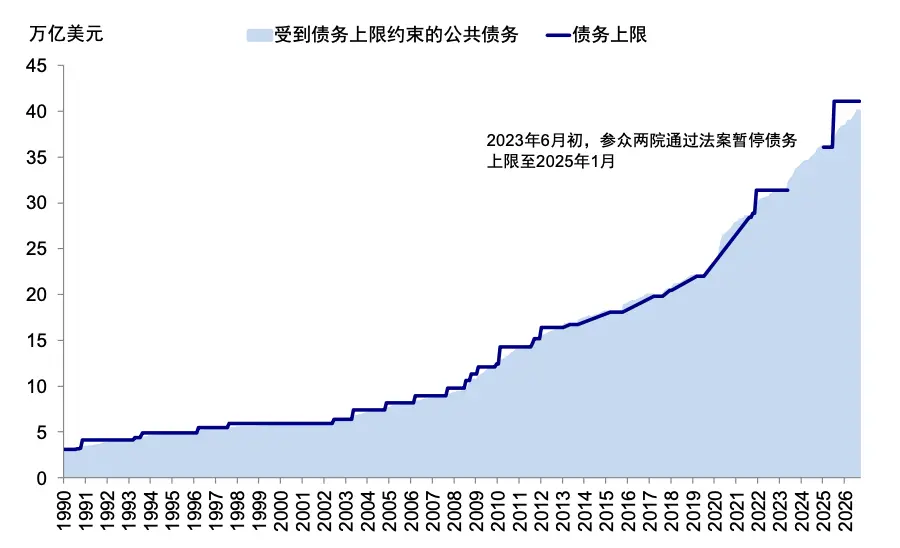
Source: Haver, China International Capital Corporation Research Department
The two parties are mutually constrained, and the resistance to fiscal implementation is increasing. We expect the deficit rate in 2027 may remain flat or slightly expand. Under the scenario of continuing current policies, we expect the U.S. deficit rate to slightly decrease from 6.18% in the fiscal year 2026 to 6.14% in the fiscal year 2027; if all new expenditures in the presidential budget are implemented, it may rise to 6.52% (Chart 8). Considering that defense spending accounts for a large proportion of the presidential budget (the CBO estimates that the skew ratio in the 2027 budget will reach 84%[7]), which is clearly at odds with the Democratic Party's ideals, we believe it will be difficult for the fiscal policy to be implemented as Trump envisioned. However, the Democratic Party is also constrained, ultimately leading to the possibility that the 2027 fiscal policy may converge towards current policies.
Chart 8: In 2027, if current policies continue, the U.S. deficit rate will drop to 6.1%, and if considering the presidential budget, it will rise to 6.5%
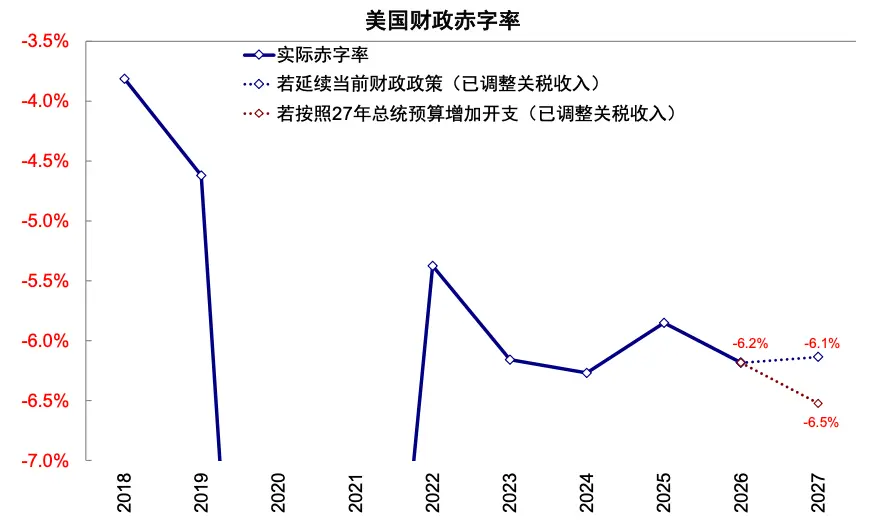
Source: Haver, China International Capital Corporation Research Department

Military: The new Congress passes restrictions on new military spending and investigations form constraints
Congress has limited direct constraints on the president in foreign and military matters. As the Commander-in-Chief of the U.S. military, the president enjoys considerable autonomy in the execution of military operations, and Congress mainly imposes constraints through war authorizations and legislative restrictions. However, in reality, the president can set regulations to evade some of Congress's restrictions. During the conflict with Iran, the Trump administration claimed that the April ceasefire meant the termination of hostile actions, arguing that the 60-day deadline stipulated by the War Powers Resolution no longer applied[8], and after resuming military actions in July, recalculated the deadline[9], thereby circumventing Congress's objections.
The new Congress can limit new military spending to balance Trump. Defense spending is a major demand in the 2027 fiscal year presidential budget, with Trump hoping to increase defense funding by $251 billion through annual appropriations and arrange an additional $350 billion in defense funding through the budget reconciliation process (Chart 3). Currently, both legislative processes are progressing slowly, lagging behind previous midterm election years (Chart 5, Chart 6), and are likely to be reviewed by the new Congress led by the Democratic Party.

AI: The Democratic Party also supports AI, with differences in regulatory intensity; federal-level legislation is difficult, but local governments may tighten regulations
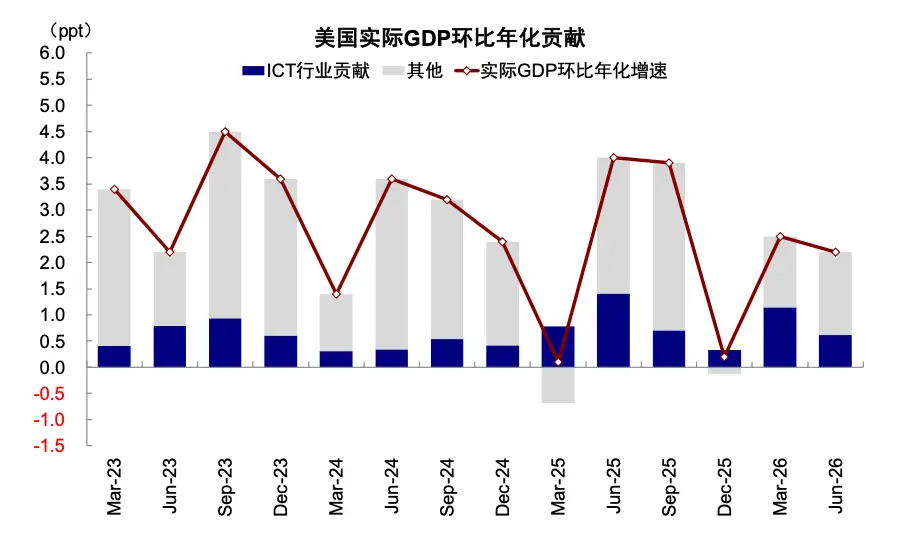
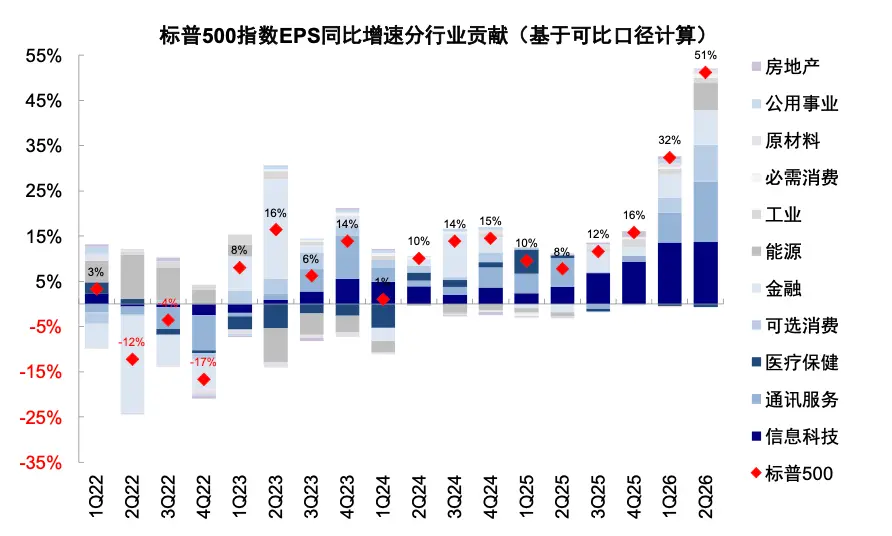
AI contributes significantly to U.S. growth and corporate profits, and the Democratic Party also supports AI development. In the second quarter, the U.S. real GDP grew at an annualized rate of 2.2%, with broad AI demand (AI production investment and infrastructure) contributing 28% to U.S. growth, driving about 0.6 percentage points (Chart 9); additionally, AI-related sectors contributed 53% to the growth of U.S. stocks (Chart 10). Therefore, both parties have the willingness to promote AI innovation. In December 2025, House Democratic leader Jeffries stated that U.S. AI companies should continue to develop and established the "AI and Innovation Economy Committee" to study policies[10]. In February 2026, Democratic and Republican senators jointly proposed the "Future AI Innovation Act," supporting AI research and development and the U.S. technological leadership[11].
Chart 9: In the second quarter, the U.S. real GDP grew at an annualized rate of 2.2%, with AI-related demand contributing 28% growth
Source: Haver, China International Capital Corporation Research Department
Chart 10: In the second quarter of 2026, AI contributed 53% to overall profit growth
Source: Bloomberg, China International Capital Corporation Research Department
The main difference between the two parties lies in the intensity of AI regulation, and it is not easy for the Democratic Party to push through federal-level legislation to strengthen regulation. In the Trump administration's AI legislative framework, it advocated relying on existing regulatory agencies and industry standards for oversight and opposed the establishment of a new federal AI regulatory agency[12]. In contrast, the Democratic Party focuses more on strengthening regulation, with Senate Democratic chief member Cantwell proposing to establish enforceable safety standards for cutting-edge models and requiring covered models to pass independent audits before release[13]. However, even if the Democratic Party sweeps both chambers, pushing regulatory bills will still be challenging, as bills passed by both chambers may still face presidential veto, and overturning a presidential veto requires two-thirds support from both chambers[14].
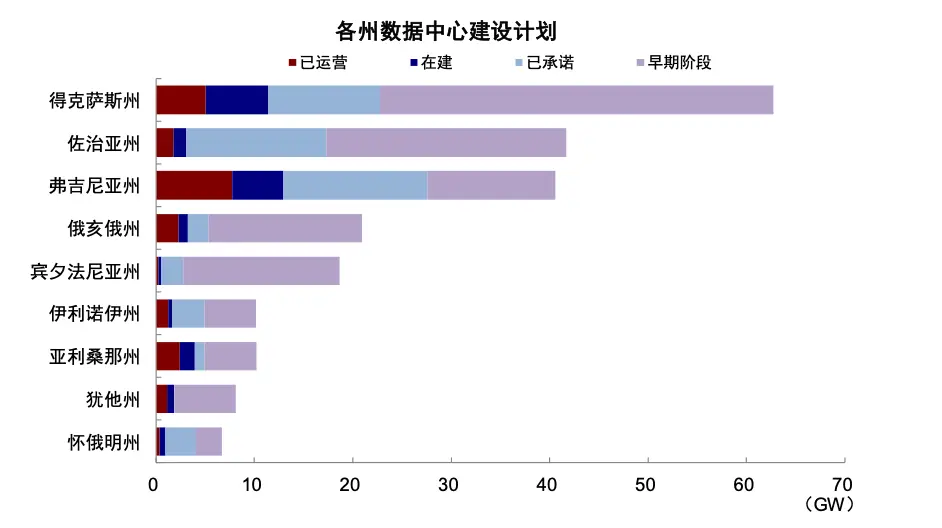
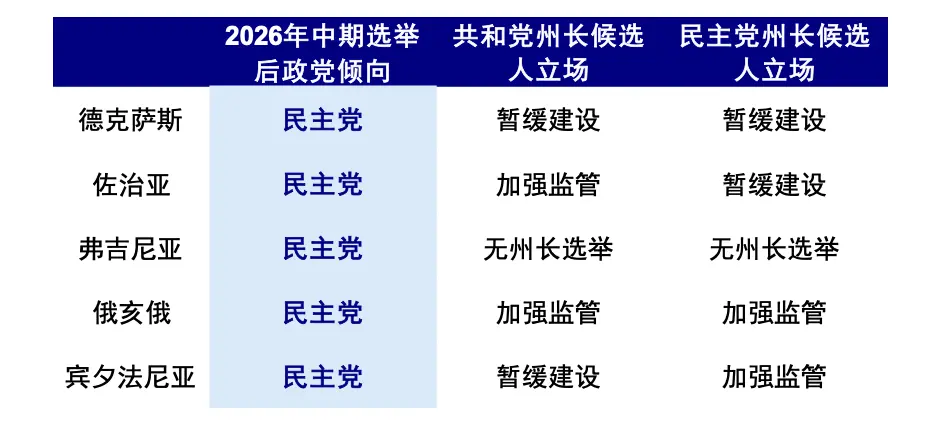
At the local government level, candidates for governors from both parties generally tend to tighten regulations on AI data centers. According to DC Byte data, the five states with the highest concentration of AI data centers in the U.S. are Texas, Georgia, Virginia, Ohio, and Pennsylvania (Chart 11). Among them, Virginia has no gubernatorial election this year, while candidates in the other four states tend to strengthen regulation of AI data centers or even delay construction (Chart 12). Based on the measures already in place, local governments may impose constraints on AI data center construction in terms of electricity costs[15], tax incentives[16], land use[17], etc.
Chart 11: The five states with the highest concentration of data centers are Texas, Georgia, Virginia, Ohio, and Pennsylvania
Source: BloombergNEF, DC Byte, China International Capital Corporation Research Department
Chart 12: Candidates from both parties advocate tightening regulations on AI data centers, with little difference in stance
Source: Multistate, China International Capital Corporation Research Department

How does a Democratic sweep affect assets? Focus on four impact channels: government shutdown, debt ceiling, fiscal policy, and AI regulation
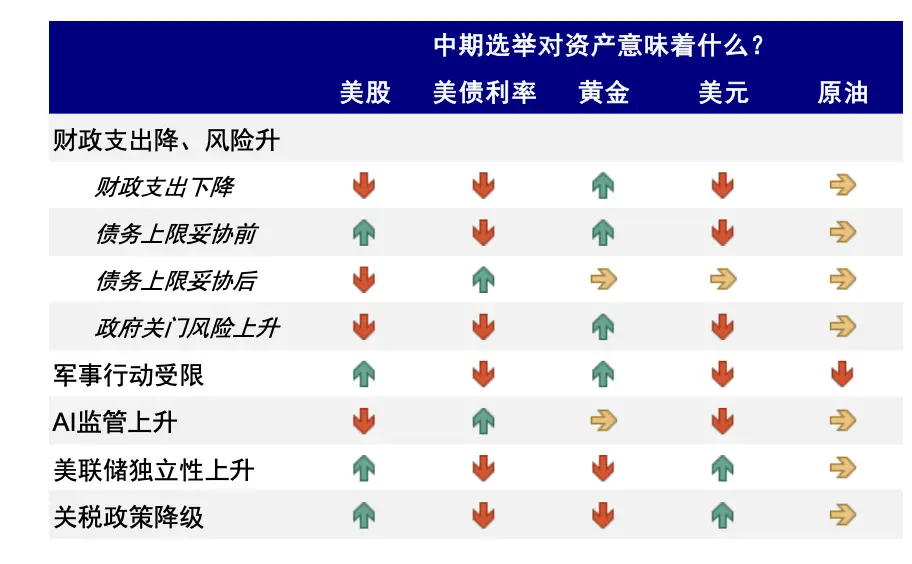
The impact of the same policy on different assets is not consistent, and short-term and long-term effects may even be opposite. For example, an escalation in political games may increase demand for safe-haven assets; fiscal expansion constraints generally benefit U.S. Treasuries, but rigid spending and default risks may pressure U.S. Treasuries and the dollar; personnel appointments being blocked may actually benefit the Federal Reserve's independence; while the direction of AI and cryptocurrency regulation is clear, the pace of implementation remains uncertain; an early end to military actions may benefit oil prices, inflation, and interest rates (Chart 13).
Chart 13: Midterm elections affect asset performance through different channels
Source: China International Capital Corporation Research Department
Ultimately, the core influence on asset pricing lies in whether the market's dominant force aims for "correction" (inflation, the situation in Iran, the Federal Reserve, tariffs) or is guided by "opposing for the sake of opposition" (AI, fiscal policy).
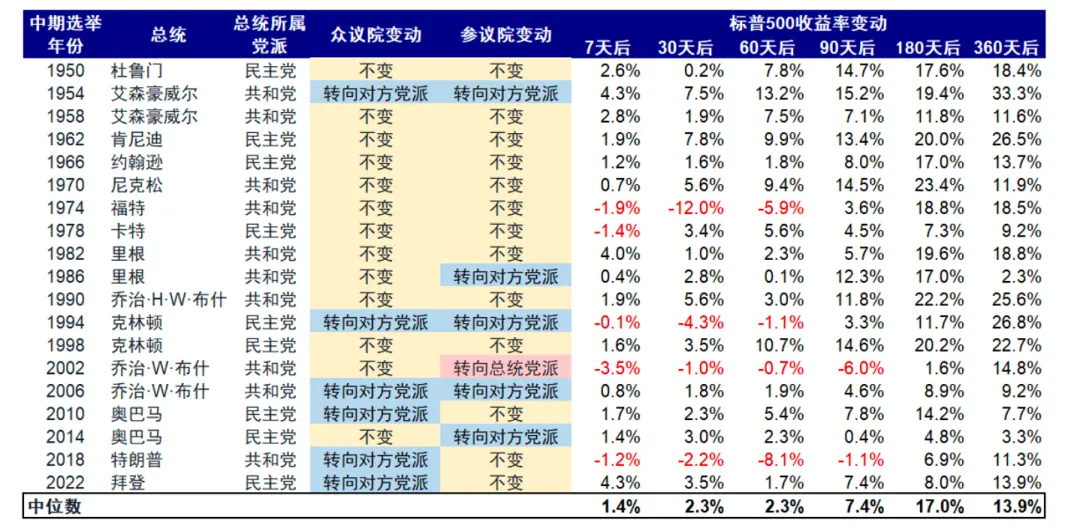
We tend to believe that in the short term, the former is dominant, which is also the reason why most U.S. stocks rose after the midterm elections (Chart 14), at which point U.S. stocks still have support, while U.S. Treasury yields and the dollar slightly weakened. However, the risks brought by the latter may also increase over time, as the closer we get to the 2028 election, the more intense the political games will become, especially if AI lacks breakthroughs and the Federal Reserve cannot lower interest rates. If that is the case, both U.S. stocks, U.S. Treasuries, and the dollar will face pressure.
Chart 14: In the past 50 years, U.S. stocks mostly rose after midterm elections
Source: Bloomberg, China International Capital Corporation Research Department
Specifically:
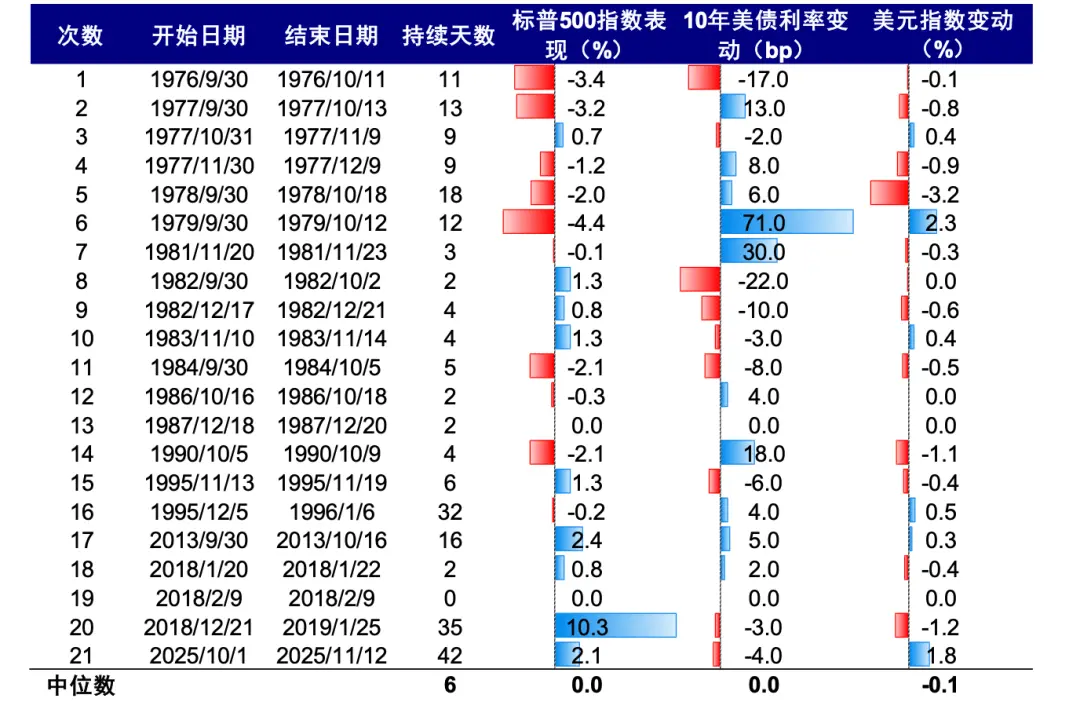
► Government Shutdown: The impact on the market is limited and may temporarily boost risk aversion. From historical experience, during the past 21 government shutdowns, the median volatility of the S&P 500, 10-year U.S. Treasury yields, and the dollar index was around 0 (Chart 15). We believe the impact of a government shutdown is limited to emotional levels, which may temporarily benefit safe-haven assets, but there is no sustained impact.
Chart 15: The impact of government shutdown on assets is not significant
Source: Wind, China International Capital Corporation Research Department
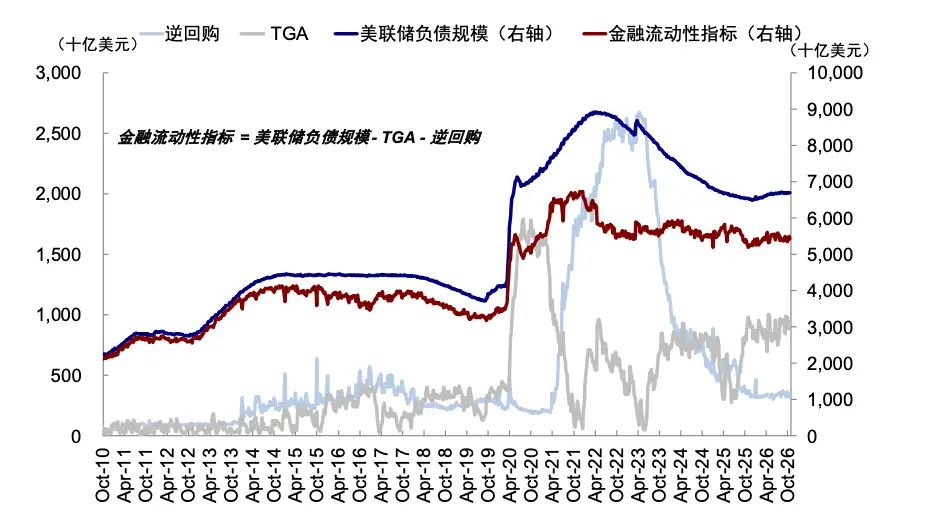
► Debt Ceiling: When the ceiling is just reached (in the second quarter of 2027), it may actually improve liquidity, benefiting bonds and U.S. stocks. At this point, the Treasury will not only stop issuing bonds to reduce bond supply but will also use cash from the TGA account to cover expenditures, achieving the effect of "injecting liquidity" (Chart 16), which can provide marginal support for bonds and U.S. stocks ("How the Debt Ceiling Can Actually Improve Market Liquidity").
Chart 16: The TGA consumption phase is expected to provide support for liquidity
Source: Bloomberg, China International Capital Corporation Research Department
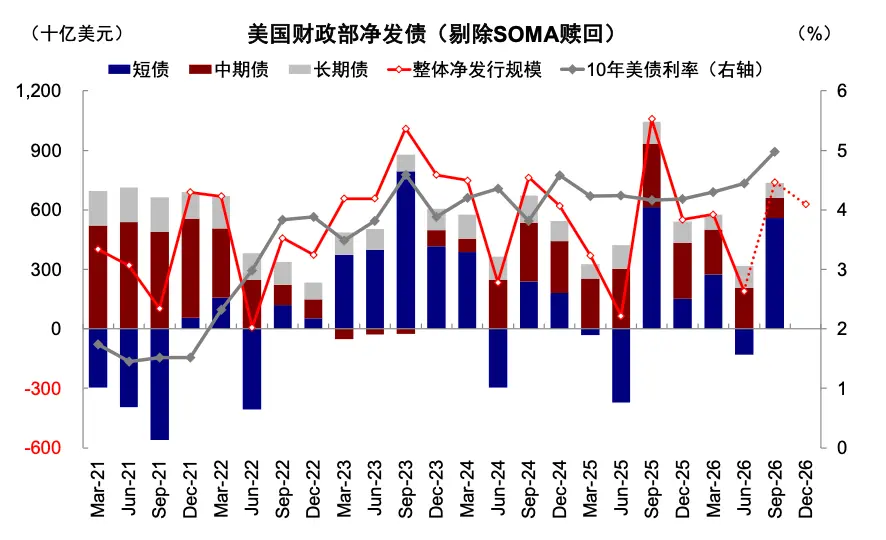
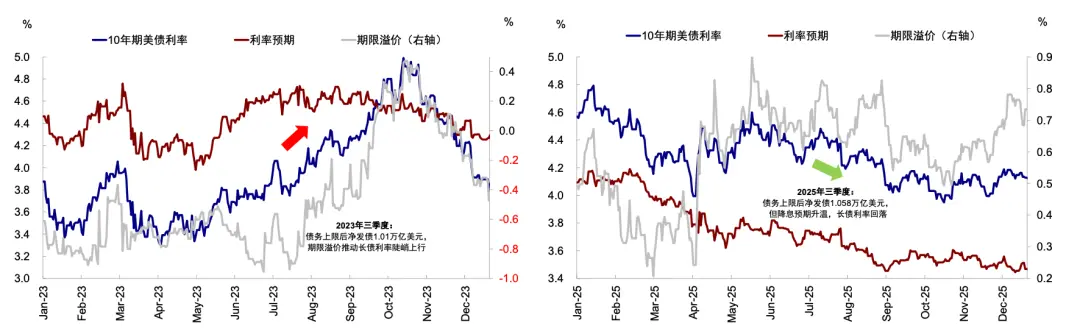
However, after the debt ceiling issue is resolved (in the fourth quarter of 2027), bond supply and liquidity will face phase-specific pressures, which is unfavorable for term premiums and U.S. stock performance. After the bipartisan agreement is reached, the Treasury will need to reissue bonds to replenish the TGA account, resulting in a temporary increase in bond supply and withdrawing some liquidity (The Paradox of the Debt Ceiling: An Inevitable Liquidity Contraction). Looking back at 2023 and 2025: 1) In terms of bond supply, the net issuance of government bonds in the third quarter of two years reached $1.01 trillion and $1.06 trillion, with structural supply pressure concentrated on the short end, where short-term bond issuance reached $794 billion and $613 billion respectively (Chart 18). During the same period, the term premium of U.S. Treasuries rapidly rose or maintained a high level, with phase-specific pressure lasting about a quarter (Chart 19). 2) In terms of liquidity, within three months after the debt ceiling constraint was lifted, the TGA balance rebounded by $404.1 billion and $447.1 billion, equivalent to 7-9% of the U.S. liquidity size at that time (Chart 16), marginally suppressing risk assets such as U.S. stocks.
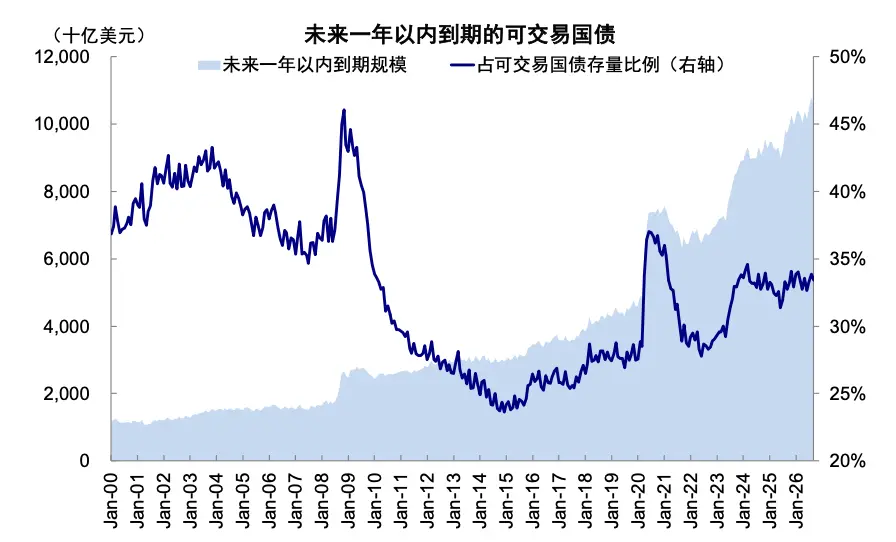
Chart 17: In September 2026, tradable government bonds maturing within the next year accounted for about 33.4%, with stable rollover pressure.
Source: TBAC, CICC Research Department
Chart 18: To replenish the TGA account, the issuance of debt in the third quarter of 2023 and the third quarter of 2025 exceeded $1 trillion.
Source: Haver, CICC Research Department
Chart 19: Affected by the Treasury's replenishment of the TGA account, the term premium of U.S. Treasuries rapidly rose or maintained a high level after the resolution of the debt ceiling in 2023 and 2025, with phase-specific pressure lasting about a quarter.
Source: Bloomberg, CICC Research Department
► Fiscal: Marginally reduced bond issuance pressure, but unfavorable for traditional demand and cyclical sector profit recovery. After the midterm elections, intensified bipartisan competition may limit fiscal expansion space. Coupled with the stable proportion of tradable government bonds maturing in the next year (Chart 17), rollover pressure is controllable, and we believe that the supply pressure of U.S. Treasuries may weaken. However, at the same time, fiscal support for growth will also weaken, especially for traditional demand that is more sensitive to government investment and household purchasing power, which may constrain profit recovery in the cyclical sector.
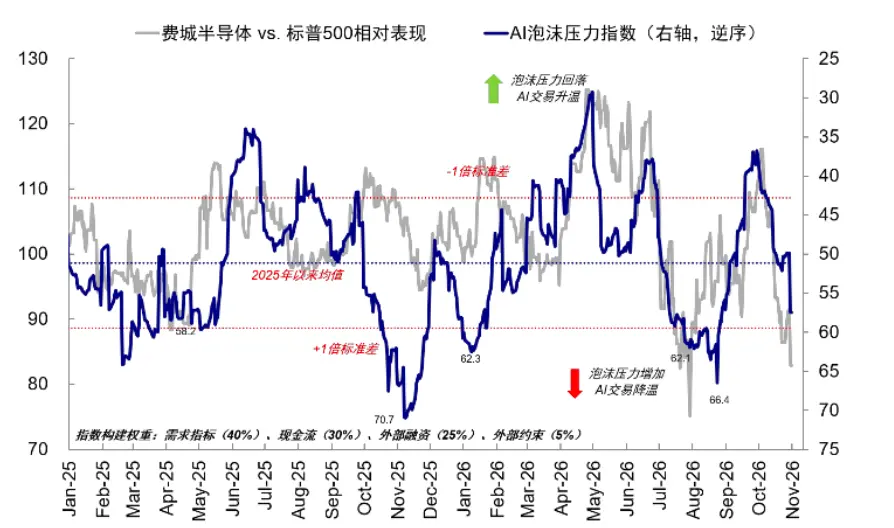
► AI: The key still lies in AI progress, but local regulation may exacerbate disturbances. Due to the current lack of clear progress in AI models and applications, market expectations are in a "transition" phase, compounded by high-intensity capital expenditures continuously squeezing the free cash flow of cloud vendors, leading to growing concerns about the speed of AI revenue realization and investment returns. The AI pressure index we constructed has also been continuously deteriorating since the end of September (Chart 20). If local governments further tighten regulations and raise AI investment costs, it may exacerbate market doubts and trigger phase-specific disturbances.
Chart 20: The AI pressure index we constructed has continued to deteriorate since the end of September.
Source: Bloomberg, FactSet, CICC Research Department
\[1\]https://apnews.com/article/c9a0ffa1ec3cd599f9bc304ae26268a2
\[2\]https://www.reuters.com/article/world/us-senate-acquits-trump-in-historic-vote-as-re-election-campaign-looms-idUSKBN1ZZ1AR/
\[3\]https://apnews.com/article/midterm-elections-democrats-affordability-corruption-018019529b14a6b3bc4a343a4e17c44f
\[4\]https://www.everycrsreport.com/reports/R46595.html
\[5\]In January 2023 and January 2025, when the debt ceiling was reached, the TGA balance decreased by about 25% compared to three to four months earlier; the TGA balance at the end of 2026 is based on TBAC's forecast.
\[6\]https://bipartisanpolicy.org/article/when-will-we-reach-the-debt-limit-again/
\[7\]https://www.cbo.gov/publication/62546
\[8\]https://www.reuters.com/world/middle-east/war-powers-resolution-purposes-us-hostilities-with-iran-that-began-february-have-2026-05-01/
\[9\]https://www.reuters.com/world/us/trump-sends-congress-formal-notice-that-iran-conflict-has-resumed-2026-07-13/
\[10\]https://democrats-science.house.gov/news/press-releases/leader-jeffries-announces-new-house-democratic-commission-on-ai-and-the-innovation-economy
\[11\]https://www.commerce.senate.gov/press/dem/release/cantwell-young-hickenlooper-and-blackburn-reintroduce-bill-to-ensure-u-s-leads-global-ai-innovation/
\[12\]https://www.whitehouse.gov/wp-content/uploads/2026/03/03.20.26-National-Policy-Framework-for-Artificial-Intelligence-Legislative-Recommendations.pdf
\[13\]https://www.commerce.senate.gov/press/dem/release/cantwell-outlines-comprehensive-governance-framework-for-safe-and-secure-frontier-ai/
\[14\]https://www.congress.gov/crs_external_products/RS/PDF/RS22654/RS22654.8.pdf
\[15\]https://gov.texas.gov/news/post/governor-abbott-directs-puc-and-ercot-to-shield-texans-from-data-center-infrastructure-costs
\[16\]https://law.lis.virginia.gov/vacodeupdates/title15.2/section15.2-2209.5/
\[17\]https://www.azleg.gov/legtext/57leg/2R/laws/0140.pdf
### Source
This article is excerpted from "The Implications of the Democratic Party's 'Sweep'" published on November 5, 2026.
Liu Gang, CFA Analyst SAC Certification No.: S0080512030003 SFC CE Ref: AVH867
Hao Yuening Contact SAC Certification No.: S0080125070024