After two weeks of launch, downloads exceeded 100,000. What is special about this wallet Changer+ that "only makes stablecoins"? (Including practical tests and tutorials)
*Author: momo, ChainCatcher*
Not long ago, at the Token2049 conference venue in Singapore, I discovered a wallet called Changer+ that emphasizes only stablecoins, which was very popular. I also experienced it on-site and directly purchased a ticket to the Singapore Zoo using stablecoins. The entire process was similar to booking tickets with fiat currency on a Web2 application, and the experience was very simple and smooth.
To my surprise, more than half a month later, looking back, its download count has already surpassed 100,000.
Cryptocurrency wallets have always been a highly competitive field, especially against the backdrop of the current overall sluggish market. Why has Changer+ suddenly gained such a high download count?
With these questions in mind, I re-downloaded this wallet and fully experienced it. From the perspective of product testing, what makes it special?
### 1. Changer+ Usage Testing: How is it different from common cryptocurrency wallets?
#### 1. Download and Create Wallet
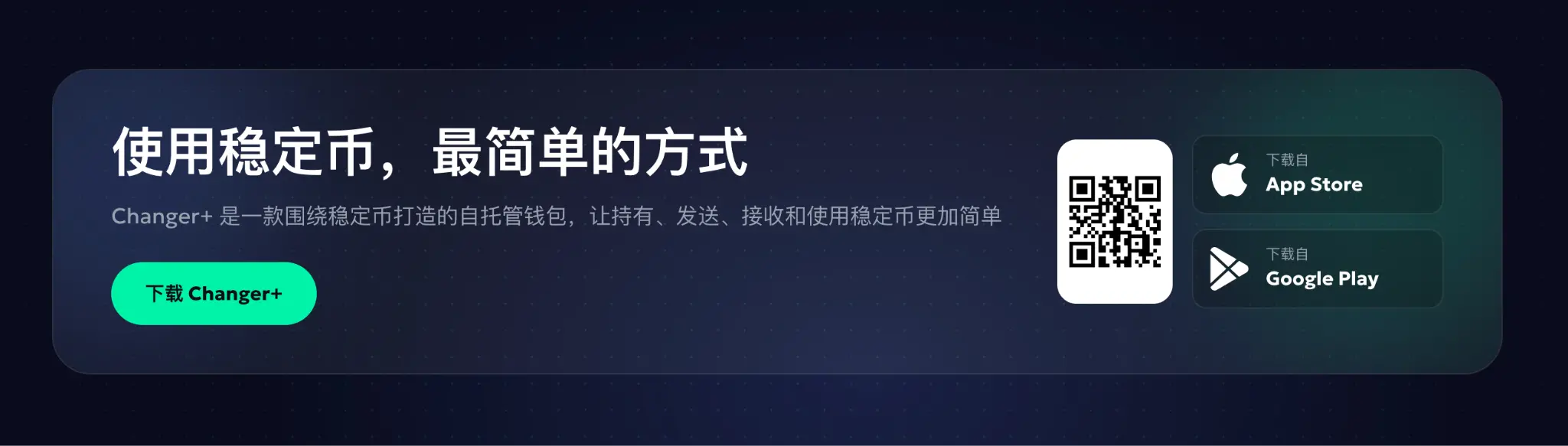
Changer+ currently only supports mobile devices and can be downloaded via the official website's download page, by scanning the QR code or clicking on the App Store or Google Play on the right.
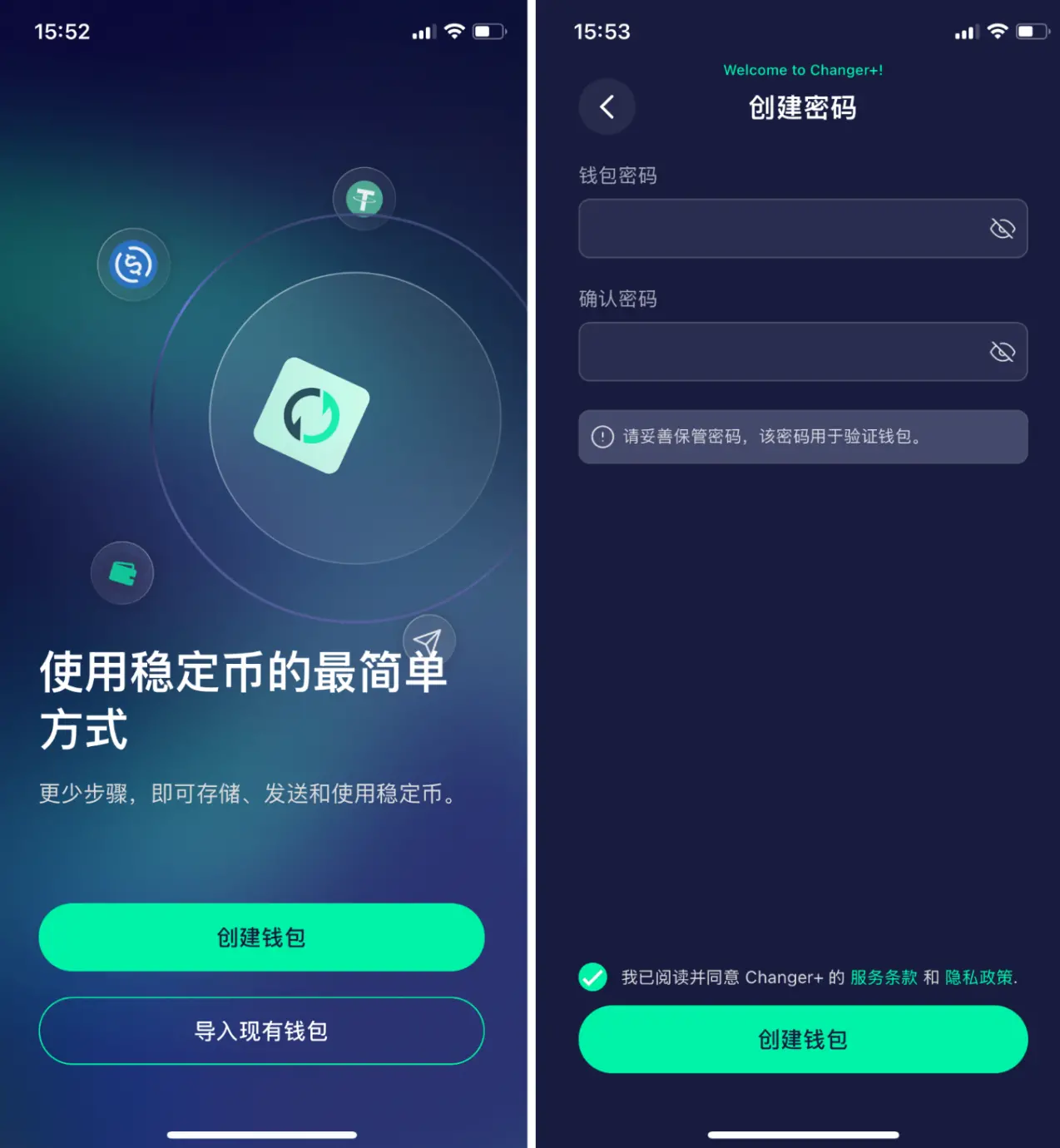
After installation, open it, click to create a wallet, set a password, which is almost identical to the registration experience of ordinary internet apps.
#### 2. Wallet Backup: High Security
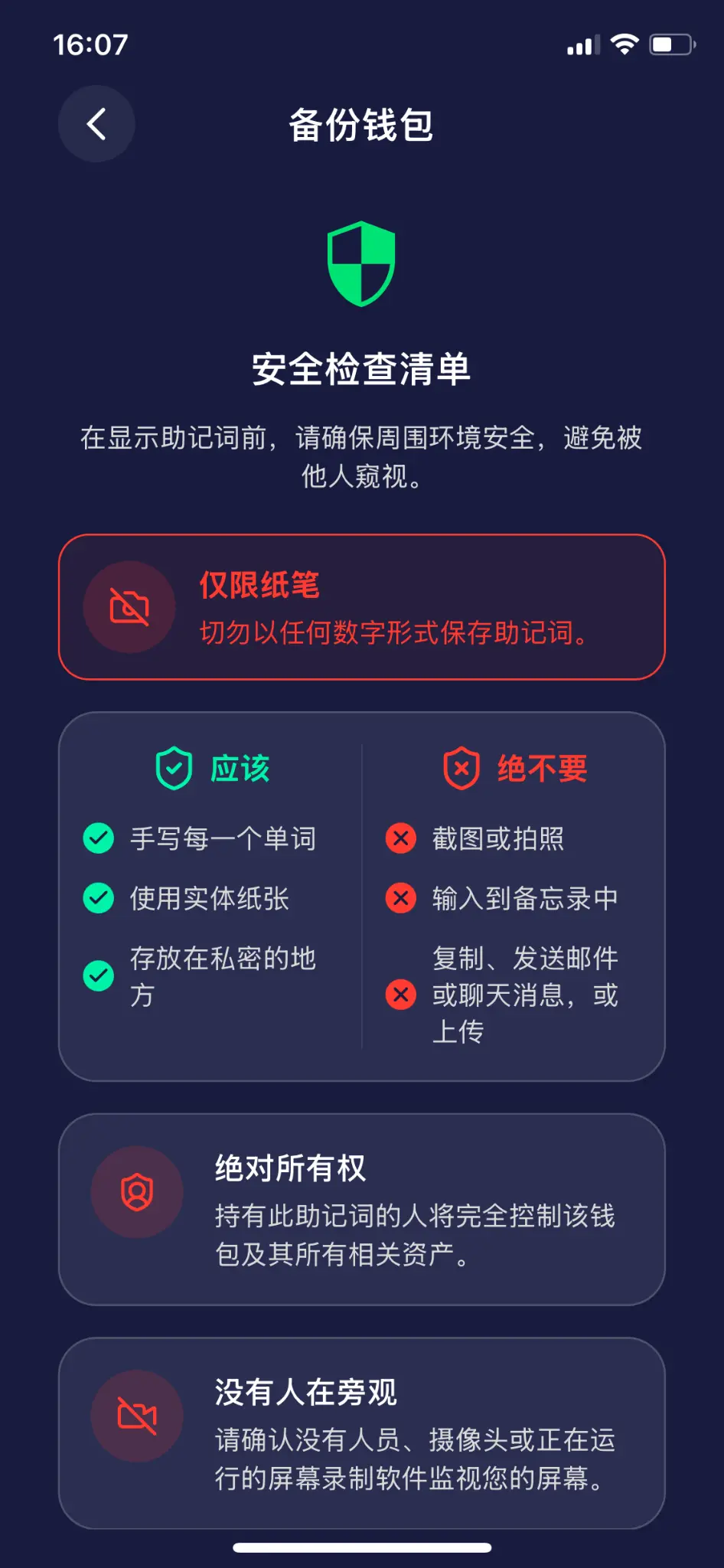
After creation, you enter the mnemonic phrase backup stage, where there is a separate security prompt page to inform users of the safest practices before entering the mnemonic phrase page.
Next, there are a few details worth mentioning: first, the mnemonic phrase cannot be directly copied, nor can it be viewed all at once; you need to click each word individually to see each phrase, and it has anti-screenshot measures to a large extent, which can greatly avoid the high-risk operation of users casually taking screenshots to store in their albums.
Second, after the backup is completed, there is a random verification step where you are asked to confirm several phrases to prevent "thinking you remembered it, but actually remembering it wrong." This process adds about ten seconds, but for beginners, this may be the most important insurance to avoid permanent asset loss.
#### 3. Transfer Testing: Only Stablecoins, Simplified Transaction Process
When it comes to the transfer transaction stage, you can feel the most special aspect of this wallet. Compared to most wallets on the market, its interface has undergone significant simplification, making it very clear and straightforward.
First, it only deals with stablecoins. There are no various token lists, no DeFi, staking, or inscriptions that ordinary users do not understand.
Currently, it supports three mainstream stablecoins: USDT, USDC, and PYUSD, retaining only the most commonly used send and receive transfer functions, with no other exchange steps. The balances of stablecoins on different networks are also clear at a glance.
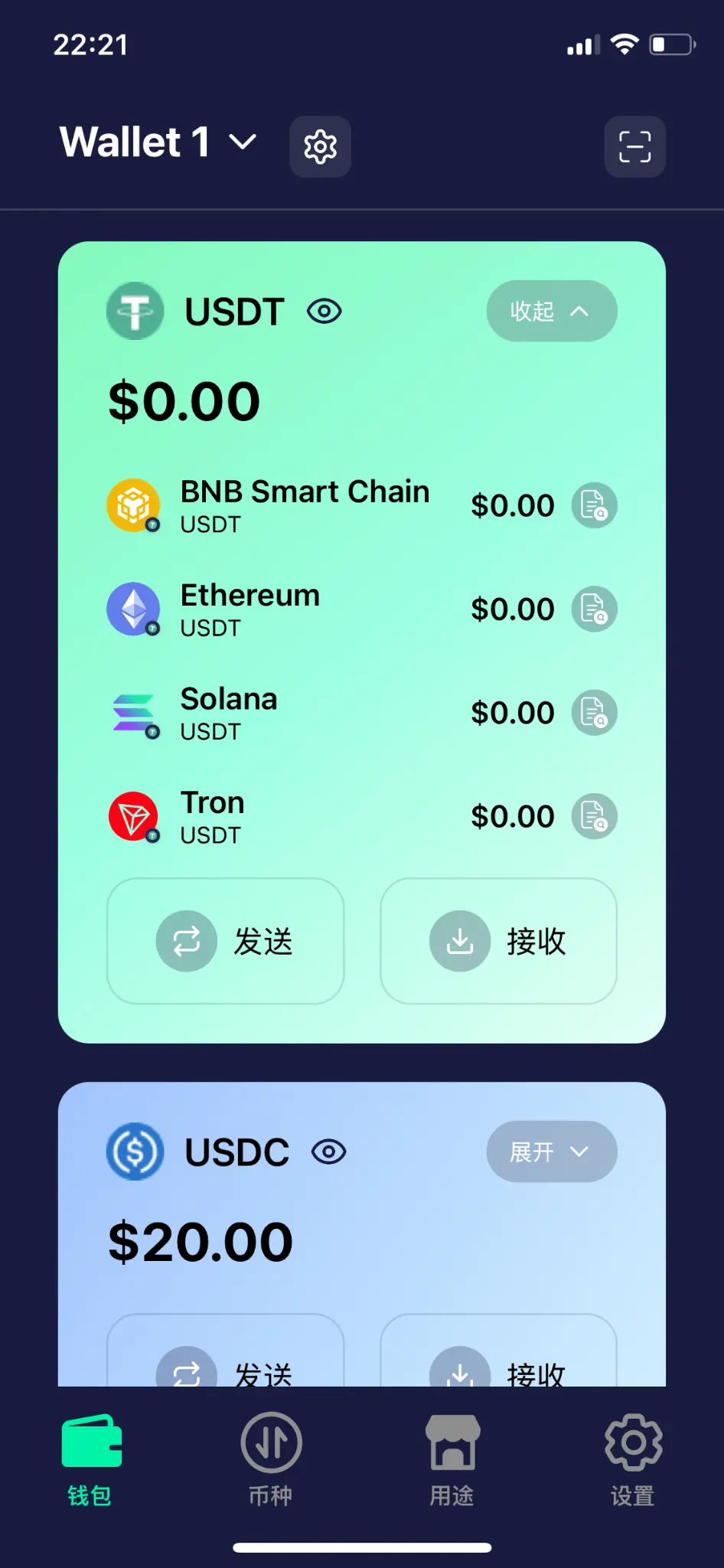
Second, after entering the "Send" or "Receive" transfer transaction, you directly select a supported network. Here, I am experiencing USDC transfer. (USDT supports four mainstream networks: BNB Chain, Ethereum, Solana, and Tron; USDC supports three networks: BNB Chain, Ethereum, and Solana; PYUSD currently supports the Ethereum network.)
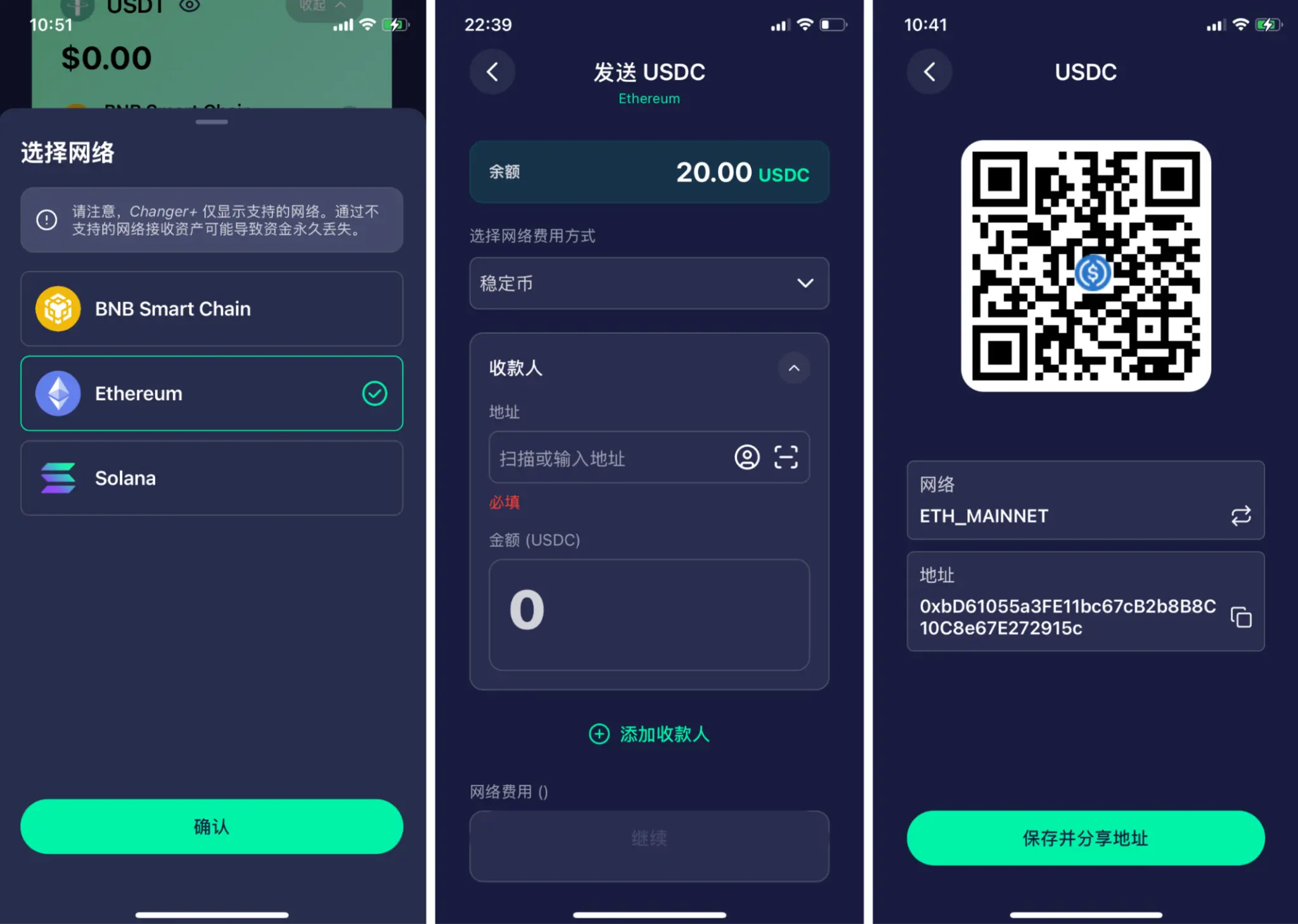
"Send" supports batch transfers to multiple addresses, which is a practical addition for users with small distribution needs. After sending or successfully receiving, you can click on the corresponding network's balance to directly view the transaction history on that chain.
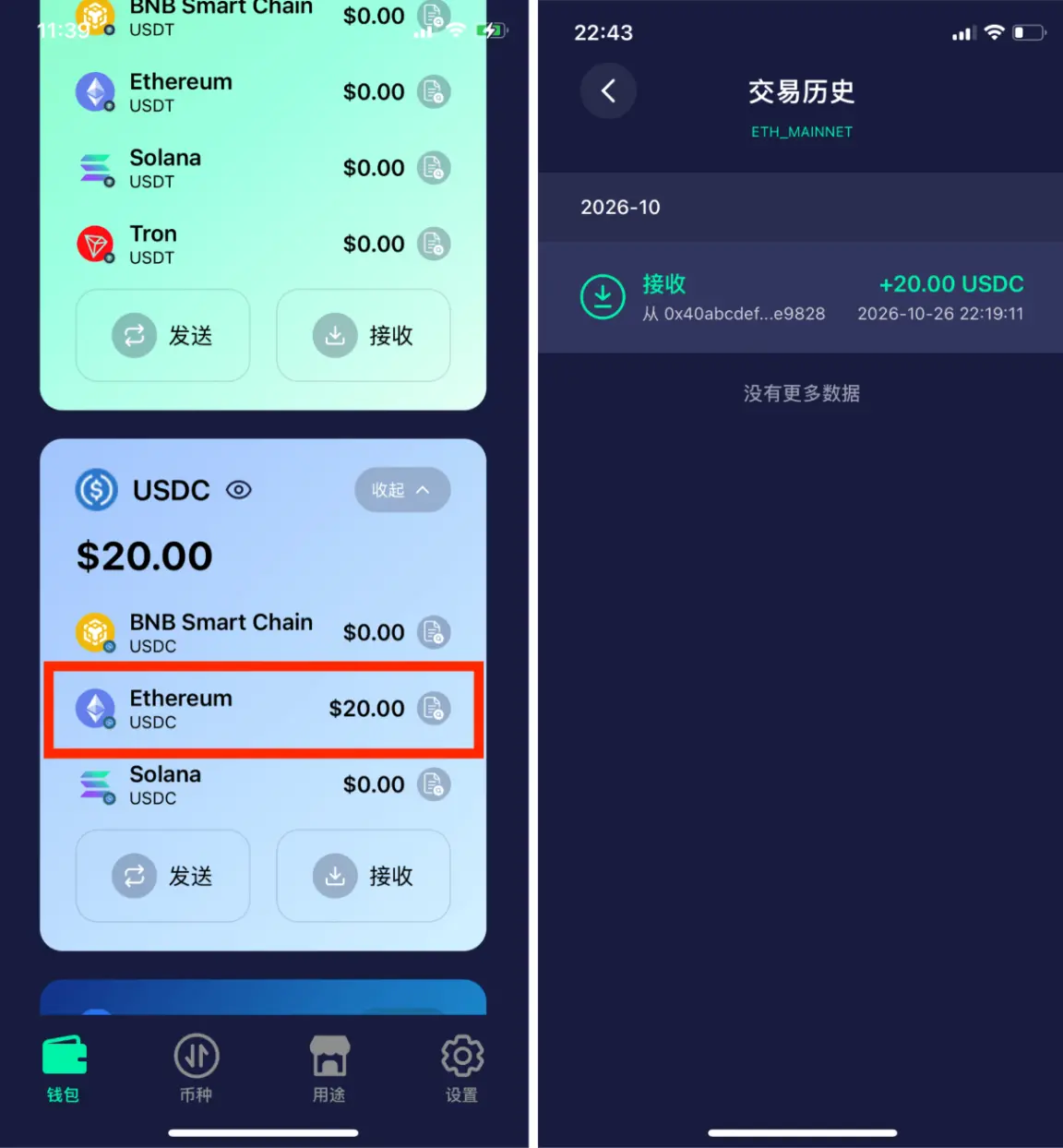
What is the most convenient part of the entire process? Gas fees can be paid in stablecoins (the option to pay with native tokens is also retained).
This has been the biggest pain point for users in the past; many wallets require network fees to be paid with native tokens, and many people get stuck at the last step: "The address is fine, the amount is fine, but I'm just short of a few native tokens to pay for Gas, transfer failed." Ultimately, you still need to recharge the network's native tokens, resulting in additional time and payment costs. Changer+ defaults to using stablecoins to cover Gas, effectively removing this troublesome step that has frustrated countless beginners.
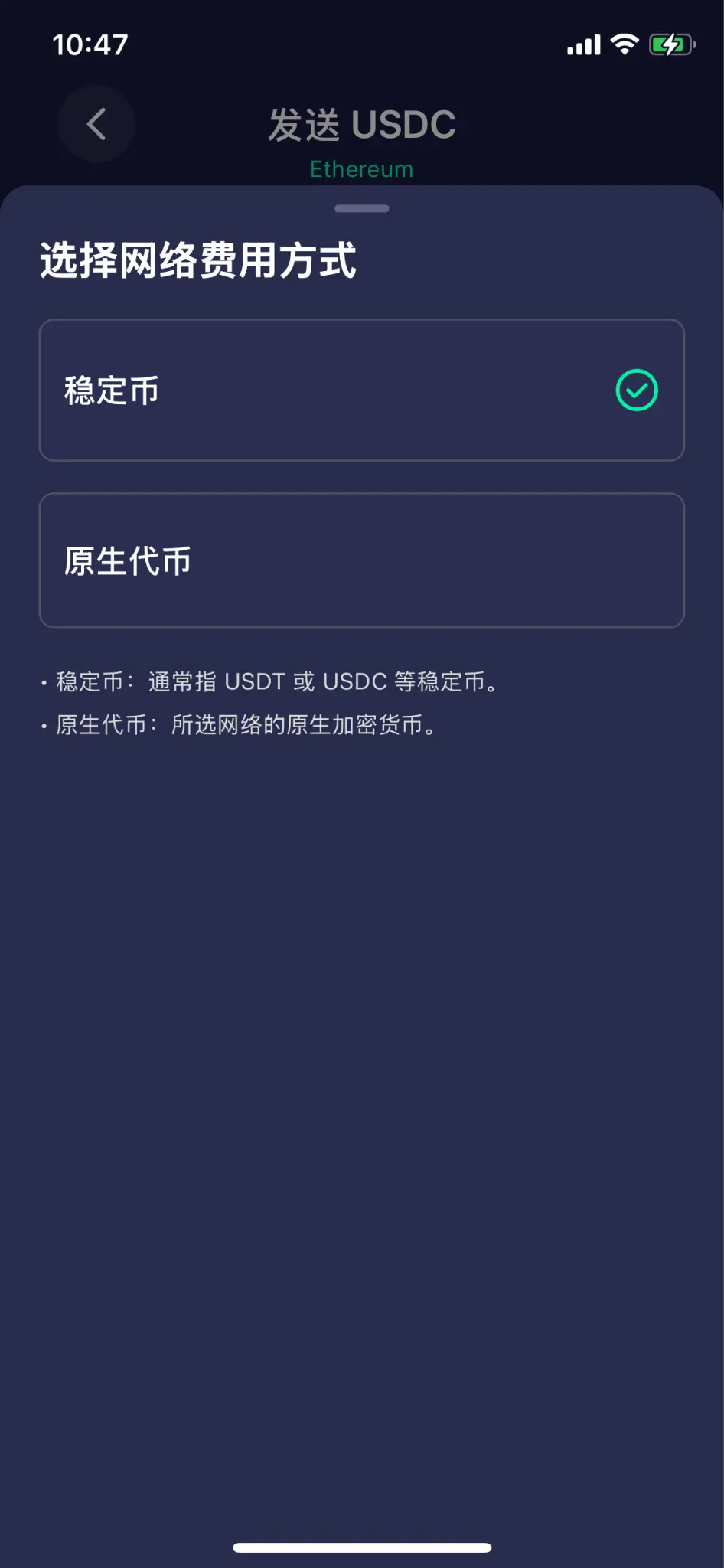
The transfer interface of Changer+ simulates the familiar experience of fiat currency transfers: fill in the address, enter the amount, confirm. Users without a cryptocurrency background are unlikely to feel confused the first time they use it.
A small tip: The project is currently running a new user promotion. From October 6 to November 6, 2026, each device can enjoy three free transactions on each chain (Ethereum, Solana, BNB Chain). Readers looking to get started at low cost can take advantage of this window period.
#### 4. Use Cases: Tickets and Data Plans Can Be Purchased Within the Wallet, Connecting to Real Offline Consumption Scenarios
Unlike most wallets that only connect to on-chain scenarios, Changer+ emphasizes real consumption.
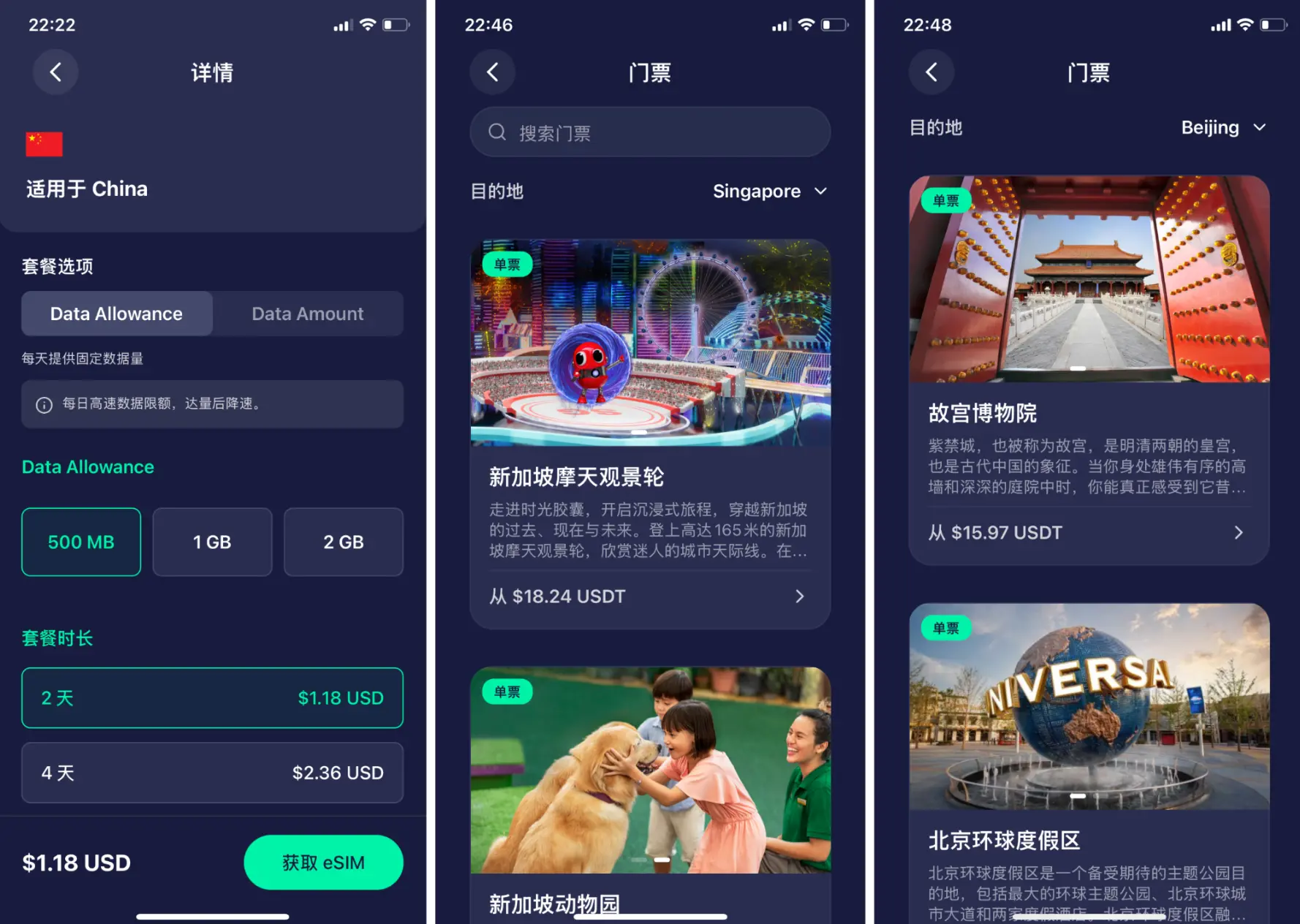
Currently, you can directly purchase eSIM data plans for various regions around the world within the wallet, as well as tickets for four countries or regions: Singapore, Hong Kong, Beijing, and Tokyo.
Since the team is based in Singapore, most mainstream attractions in the Singapore region are already covered, supporting 26 attractions. The purchasing process is basically similar to online booking in Web2.
#### 5. Other Features Enhancing Security and Experience
1) Secure Address Scanning:
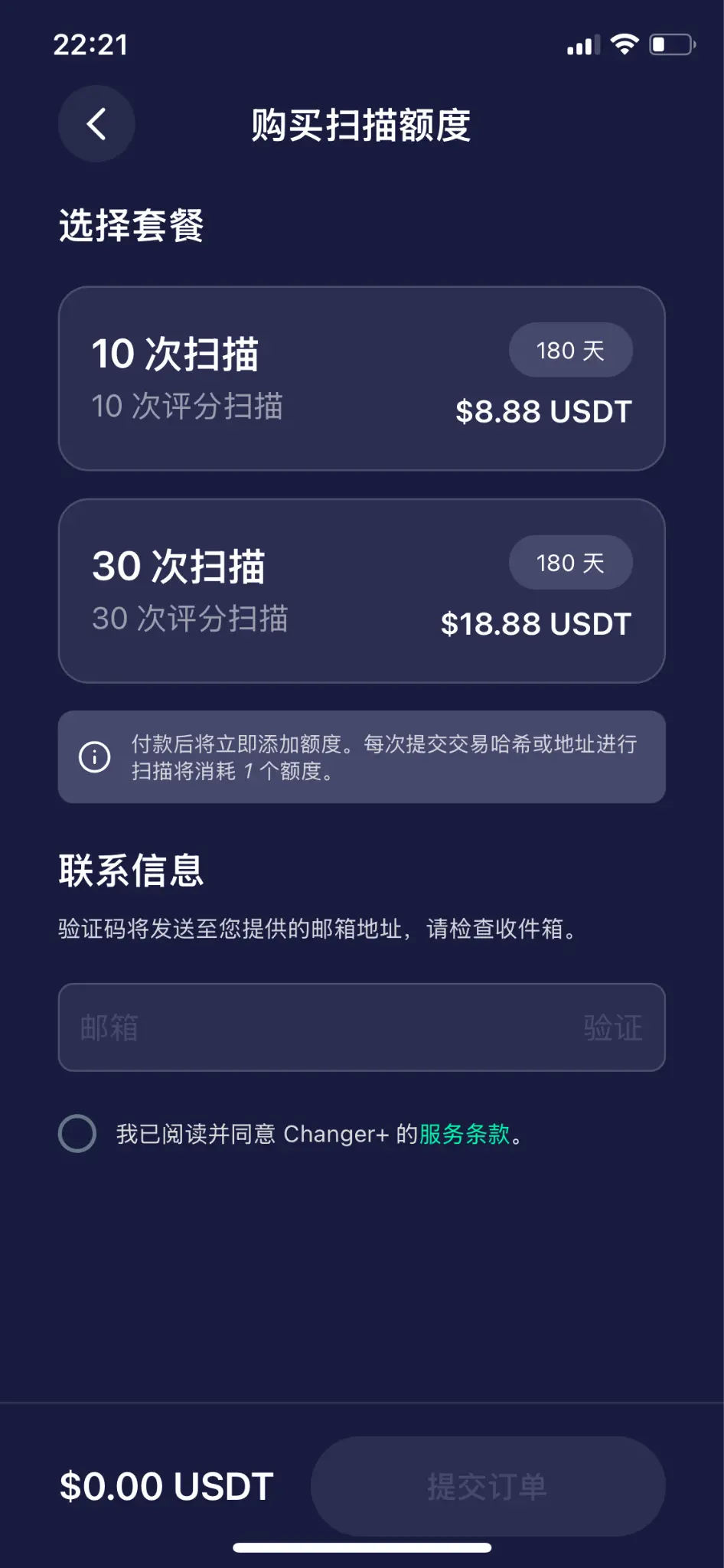
In addition to offline consumption, the stablecoin balance in the wallet can also be used to purchase security scanning services, helping you conduct a risk assessment before transferring. It mainly assesses the risk by examining address associations, transaction activities, and the historical risk status of that address.
For users with large transfer needs, this service can indeed provide much peace of mind during the transfer process. Currently, there are two pricing packages, averaging about 0.629U or 0.88U per use, which is acceptable.
2) Exchange Rate Inquiry:
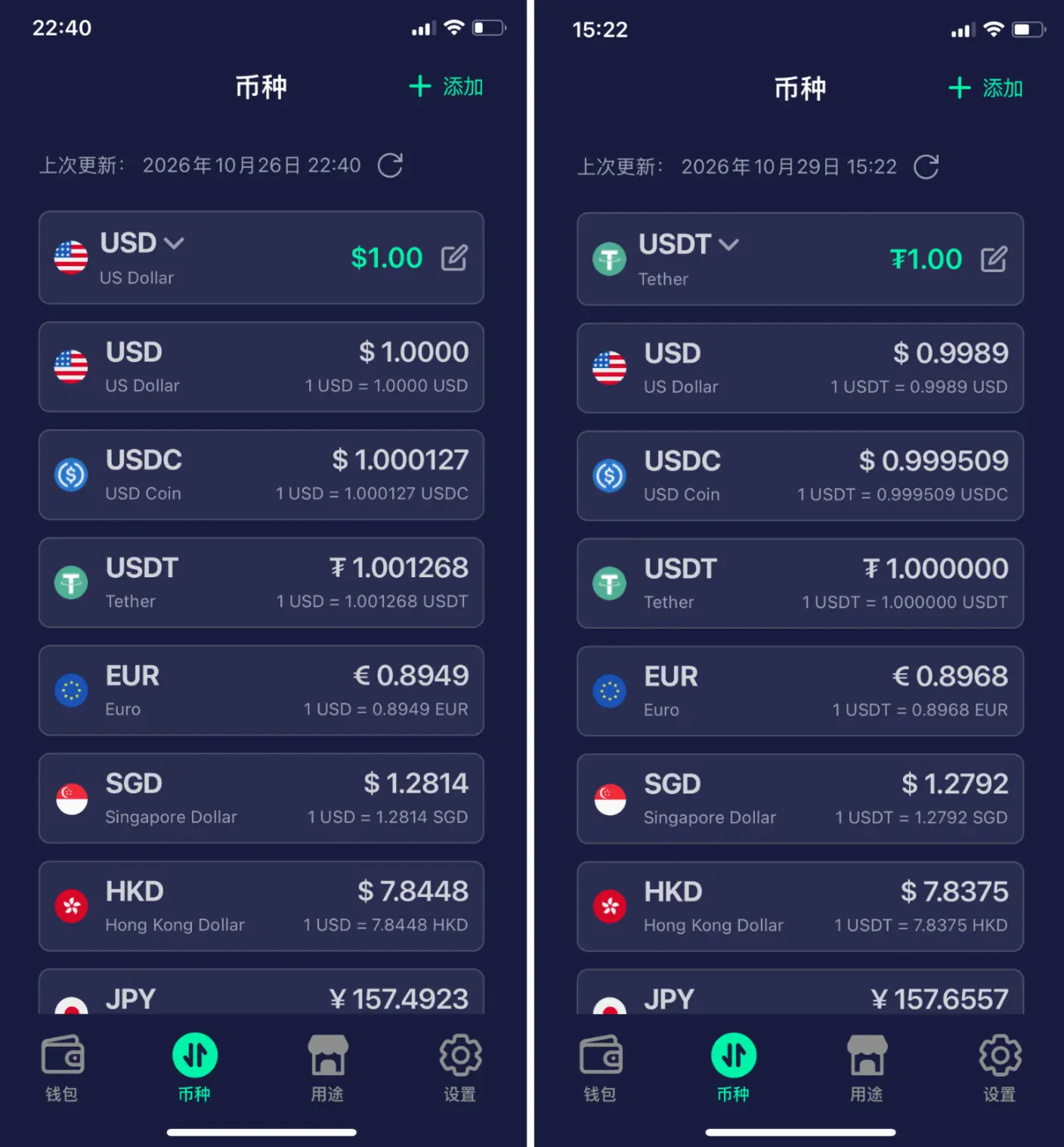
Additionally, the wallet has a dedicated exchange rate page, where you can not only view the reference exchange rates of stablecoins against major fiat currencies worldwide in USD but also freely switch the base currency to check the reference exchange rates between stablecoins and various fiat currencies, as well as between different regional fiat currencies. This solves the most common conversion problem in practical use: whether confirming amounts before cross-border transfers or calculating costs during overseas consumption, you no longer need to switch to other tools; you can know how much this money is in local currency right within the wallet.
Initially, I didn't quite understand why the exchange rate needed a separate page. After using it, I gradually realized its purpose: Changer+ aims to be more than just a "tool on the chain." It wants to display the value of stablecoins using familiar fiat currency, providing intuitive references for daily transfers and cross-border remittances, helping users clearly understand how much they are sending or receiving.
#### Testing Summary
From this testing, Changer+'s product choices are very clear: it does not aim to be a full-featured wallet but focuses solely on stablecoins. This choice is supported by market logic—stablecoins are currently the most consensus-driven and largest segment in the cryptocurrency industry, with on-chain transaction volumes surpassing most L2s, and use cases extending to consumption. The problem is that in the past, no wallet has truly centered around this need; stablecoins have merely been a deeply hidden supplementary option in most wallets.
From a testing perspective, this positioning directly determines its experience: the functionality is sufficiently focused, with no cluttered token lists or complex features; Gas can be paid directly with stablecoins, removing the most common reason for transfer failures—"lack of native tokens"; the entire transfer process is intuitively close to fiat currency apps. The exchange rate inquiry, stablecoin consumption, and address risk scanning around this positioning also point towards "usage" rather than "on-chain gameplay."
Thus, its target audience is very clear: users who simply want to hold, transfer, and consume stablecoins. If their needs match, it is expected to be one of the more complete choices.
### 2. How Secure is Changer+?
Having tested the product experience, Changer+ hides operations that previously troubled users, such as Gas replacement, in the background, leaving only clear actions of "send, receive, use" in the foreground. For beginners, this "unobtrusive" experience is indeed the core of a friendly experience. However, since wallets are ultimately about managing money, no matter how smooth the experience is, if security is not up to par, everything is moot. So, let's take a look at the security foundation of Changer+.
First is the control of private keys. Changer+ adopts a self-custody architecture, where private keys only exist on the user's device, and every transaction requires personal authorization, meaning the platform cannot access the user's assets. This fundamentally eliminates risks such as "platform misappropriation of funds." Of course, the downside is that if the private key is lost, no one can help you recover it, which is a commonality of all non-custodial wallets that new users need to be aware of in advance.
Second is the audit situation. The project has completed independent security audits conducted by SlowMist and Echo Pulse, with Echo Pulse also conducting penetration testing. This institution holds CREST certification and a Singapore license, qualifying it as a legitimate entity. Additionally, the audit by CertiK is currently underway, with results expected to be announced in November.
Finally, looking at the team, this is also a side of assessing security. Overall, this is a composite team of "traditional finance + government-level security + Web3 operations," supported by a private family office.
Changer+ CEO Leon Gao has 15 years of experience in banking and fintech system design and architecture, having worked for a Hong Kong-listed technology company and a licensed payment institution in Singapore. CTO Zack Chen has led multiple projects aimed at top clients in Singapore, focusing on government-level security and user protection architecture. Chief Growth Officer Yun Han Wong has over 10 years of experience in leading centralized exchanges and Web3 projects.
According to official sources from Changer+, their product was refined for a full 3 years before launch, which itself is a statement in an industry eager for quick success. In the past, many infrastructure projects related to user assets, such as wallets, spent most of their energy on financing, token issuance, and airdrop incentives, ultimately failing to impress with the product itself, attracting only a group of speculators. Once the incentives and token issuance were completed, they ended up in an awkward situation with no users or even a death spiral. Changer+ seems to be aiming to refine its product based on real user needs and real scenarios.
### III. Less is More: Why Does Changer+'s Positioning Work?
After testing the product and examining its security, let's return to the initial question: Why has Changer+ managed to achieve a good download volume in the crowded wallet market in such a short time? This question must start with the evolution of the wallet sector over the years.
Cryptocurrency wallets have gone through several rounds of evolution, similar to public chains and other infrastructures, accustomed to competing on technology and piling on features; multi-chain support, DeFi aggregation, staking—one app seems to want to encompass the entire industry.
However, a repeatedly overlooked fact is that the vast majority of users actually want something very simple: it needs to be easy to use and functional. More critically, many wallets over the past few years have bet their growth on token issuance and incentives; once the subsidies stop, users scatter immediately. History has proven that excitement bought through incentives is not a sustainable moat; refining the product to make it genuinely usable and sustainable is fundamental for a project to survive its lifecycle.
From this perspective, Changer+ is a sample worth observing. It does not compete on the number of features but instead focuses on perfecting a few high-frequency actions to be extremely simple. I tend to believe that more wallets will shift in this direction, and it may be a pioneer in this regard.
Expanding the view to stablecoins, this is probably the direction with the strongest consensus in the current cryptocurrency industry. Strangely, despite such a huge demand, no wallet has truly centered around it in the past; most products on the market treat stablecoins as a supplementary asset option, buried in multiple layers of menus, making them still complex to use.
However, gaps often represent opportunities. Changer+ has chosen a clear route, not going for an all-encompassing approach but focusing on the niche scenario of stablecoins, creating a wallet that prioritizes stablecoins and lowering the barriers for holding, transferring, and using stablecoins to a level acceptable to ordinary users.
It is estimated that what the Changer+ team wants is straightforward: when users need to use stablecoins, Changer+ is the first entry point they think of.
In summary, the wallet sector is shifting from "competing on features and incentives" to "competing on real needs and real experiences," and stablecoins represent a direction with the strongest consensus but a long-term lack of dedicated entry points. Changer+ happens to stand at the intersection of these two lines. Whether it can succeed depends on whether it can truly make "simplicity" a habit for users, rather than just another fleeting growth spurt.