After the Binance hack, will DEX be the winner?
*Author: Zhou, ChainCatcher*
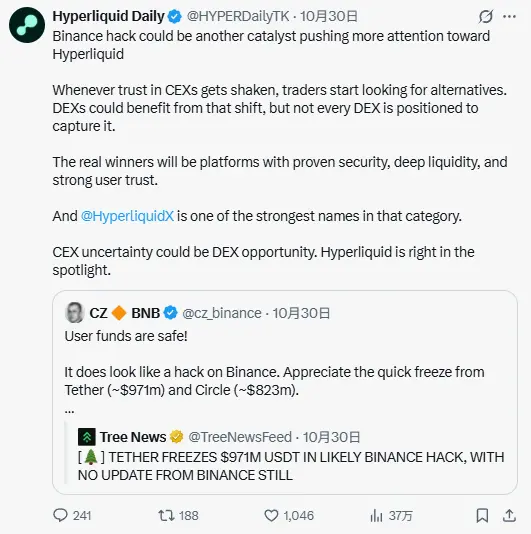
After the theft incident at Binance, discussions about the competition between CEX and DEX have intensified. Among them, the Hyperliquid community account Hyperliquid Daily stated that whenever trust in CEX is damaged, traders will seek alternative options, and DEX is expected to benefit from this, with Hyperliquid currently in the spotlight.
This tweet quickly sparked controversy, with some users criticizing it as "kicking someone when they're down," believing it to be opportunistic promotion amid industry losses; others pointed out that this account is not an official Hyperliquid account, and its statements do not represent the project's position. Beyond the controversy, the question itself is worth probing.
### 1. How much of the funds leaving Binance did DEX catch?
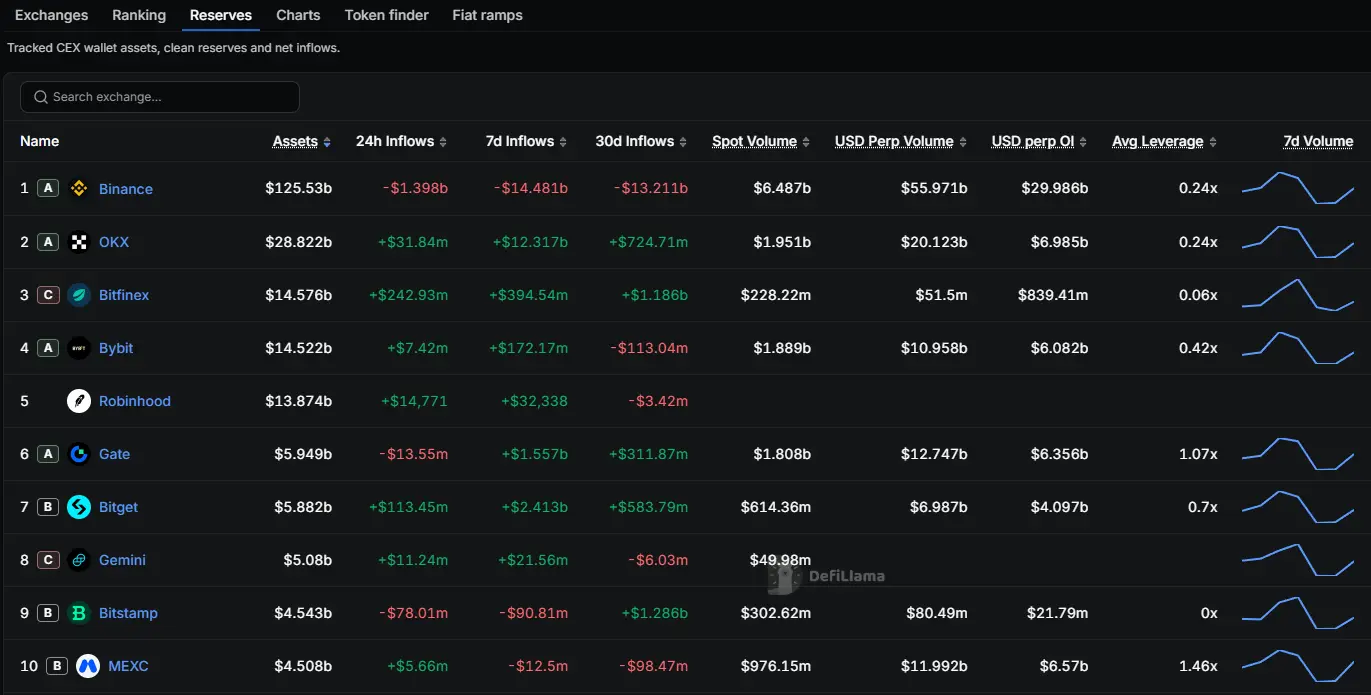
On November 1, Binance began to gradually resume withdrawals, leading to an outflow of funds. According to Binance's official disclosure, on the first day of resuming withdrawals, approximately $3.64 billion net flowed out of the platform within about 9.5 hours, accounting for about 2.1% of the platform's total assets.
Data from [DefiLlama](https://defillama.com/cex/assets/binance-cex) shows that on November 2, Binance's 24-hour net outflow reached approximately $6.3 billion at one point, and then gradually slowed down.
The funds leaving Binance typically have several destinations, including other centralized exchanges, ETFs, DEX, and users' own self-custody wallets.
First, let's look at other CEX. DefiLlama data shows that during the same period, the total net inflow to major exchanges like OKX, Bybit, and Bitget was only about 10% of Binance's net outflow.
To compete for this portion of funds, Binance and Bitget successively launched high-yield financial products, with USDC annualized returns even reaching over 10%.
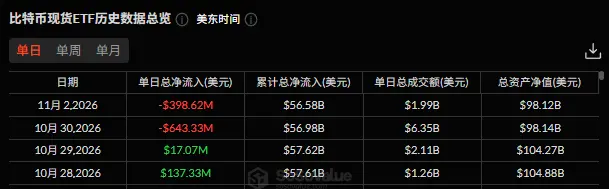
In terms of ETFs, in the two trading days following the theft, U.S. Bitcoin spot ETFs saw net outflows of approximately $640 million and $400 million, respectively.
Next is DEX, which is also the core judgment of Hyperliquid Daily's tweet. Geoffrey Kendrick, Global Head of Digital Assets Research at Standard Chartered, also stated that this incident could accelerate the shift of trading to DEX, with Uniswap benefiting in the long term.
From the data, Uniswap's trading volume over the past 7 days was about 20% higher than the average level over the past 30 days, but the increase in DEX trading volume across the entire market during the same period was also around 20%, indicating that Uniswap did not see additional funds flowing in.
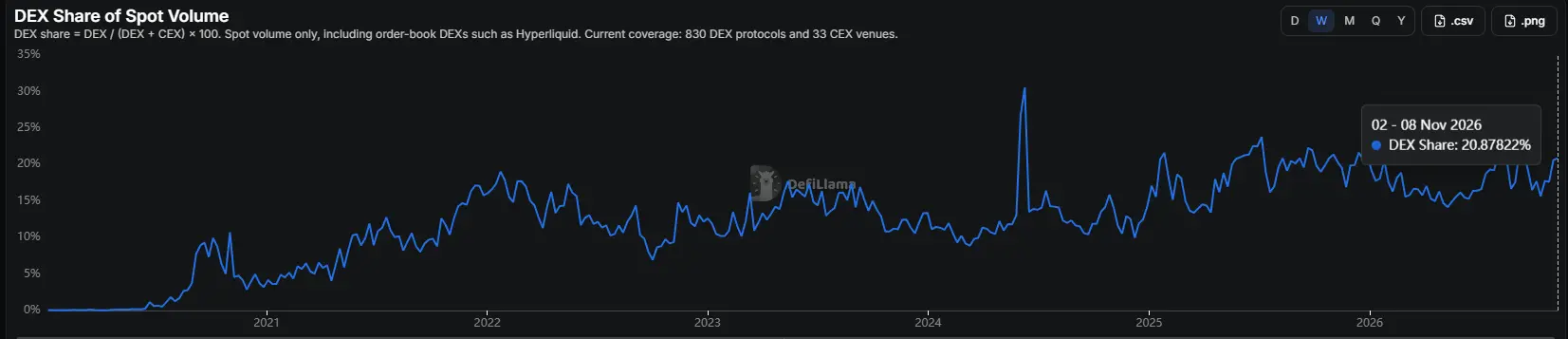
Hyperliquid's situation is similar. According to DefiLlama data, on November 2, the net inflow to Hyperliquid was about $125 million, less than 10% of Binance's net outflow during the same period. When looking at the entire DEX market, the DEX spot trading volume during the week of the theft accounted for about 20.6%, which increased but still remained below the summer peak of this year.
Since other CEX, ETFs, and DEX only caught a small portion, where did most of the funds go?
Several Binance users I spoke with indicated that after the resumption of withdrawals, they had converted some assets into BTC and transferred them to their hardware wallets.
On-chain data shows that most of the funds leaving Binance indeed flowed to addresses not marked as exchanges, a significant portion of which should be users' self-custody wallets. However, DefiLlama data shows that the decline in Binance's USDT balance after the theft was much greater than that of BTC, indicating that more funds were withdrawn directly in the form of stablecoins.
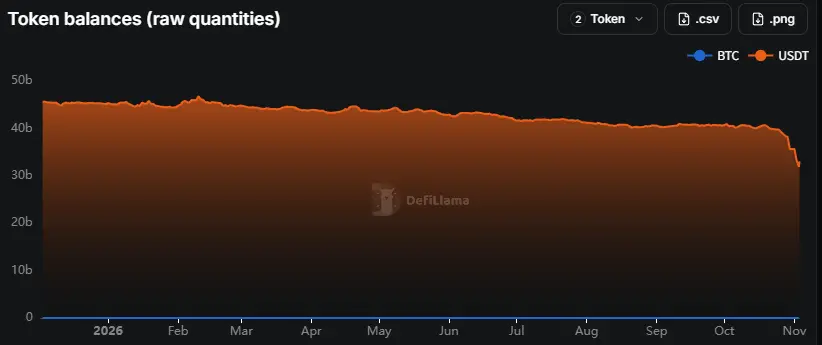
Overall, DEX did not become the main recipient of this round of fund outflows. The funds leaving Binance returned more to the users themselves, with limited migration between exchanges.
### 2. What is the market share of DEX? What are the long-term driving forces behind its rise?
Looking at the longer term, the market share of DEX has been on the rise. In the spot market, according to CoinGecko's [2025 Annual Report](https://www.coingecko.com/research/publications/dex-to-cex-ratio), at the beginning of 2021, DEX spot trading volume was only about 6% of CEX, and by November 2025, it had risen to about 21%.
Data from The Block shows that entering 2026, this ratio continues to rise slowly, reaching about 23% in October this year. Among them, Uniswap remains the absolute leader, with a trading volume of about $64 billion over the past 30 days, nearly three times that of the second-ranked PancakeSwap.
The trend in the perpetual contract market has been more convoluted. In 2025, driven by new platforms like Hyperliquid and Lighter, perpetual DEX experienced explosive growth. However, this growth largely depended on the incentive programs of various platforms, and over the past year, the trading volume ratio of perpetual DEX to CEX fell from about 21% to about 12%.
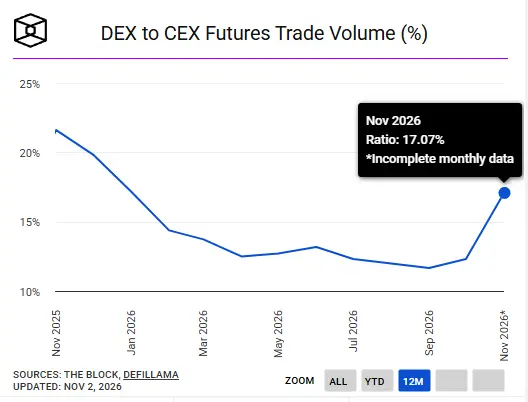
However, Hyperliquid is an exception. In October this year, its perpetual trading volume was about $245 billion, accounting for about 14% of Binance, higher than about 11% in the same period last year.
Whether in spot or perpetual trading, the changes in DEX's share do not show a clear correlation with security incidents at CEX. After the collapse of FTX in November 2022, the spot trading volume ratio between DEX and CEX did not rise, only returning to 10% in March 2023 when U.S. regulations tightened. Similarly, after the theft at Binance, DEX's share only experienced slight fluctuations.
From the changes over the past two years, there are at least three clues driving the rise of DEX's share.
The first clue comes from CEX itself. In May 2025, Binance launched Binance Alpha, routing users' trades to PancakeSwap. According to CoinGecko statistics, in June of that year, the spot trading volume ratio of DEX to CEX surged to a historical high of 37.4%, with PancakeSwap briefly surpassing Uniswap, capturing a market share of 64.5%. However, as incentives waned, PancakeSwap's trading volume plummeted by 44.7% month-on-month in August, allowing Uniswap to reclaim the top spot.
In April of this year, PancakeSwap integrated with Base App, a subsidiary of Coinbase. Both of the largest centralized exchanges are actively directing users' trades to on-chain. Such traffic diversion can bring explosive growth in a short time, but whether it can be solidified into long-term share depends on real demand beyond incentives.
The second clue is the migration of trading varieties to on-chain. At the beginning of 2025, the meme coin craze on Solana led to a new high in DEX spot trading volume, breaking through the range it had been in for many years. Now, Hyperliquid is allowing third parties to deploy perpetual contracts for traditional assets like stocks, commodities, and foreign exchange through the HIP-3 mechanism.
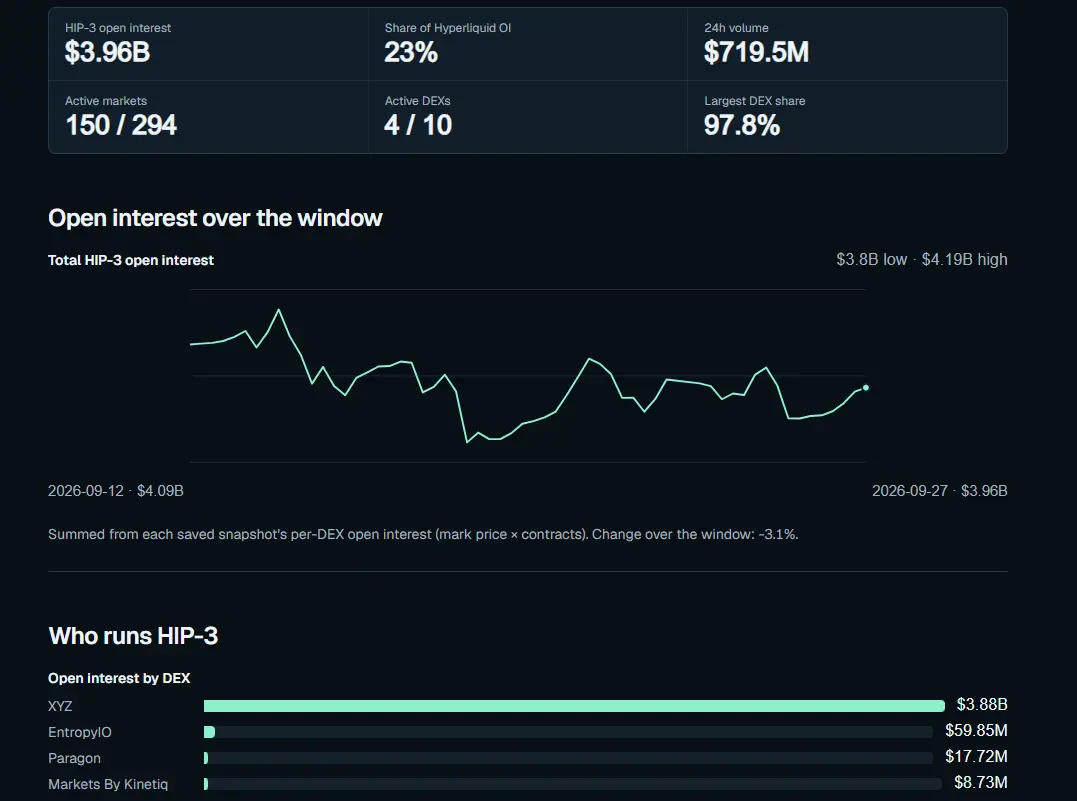
According to [HypeBasis](https://hypebasis.io/research/state-of-hip-3/2026-09) statistics, as of the end of September, the open interest in the HIP-3 market was about $4 billion, accounting for about 23% of Hyperliquid's total open interest. Among them, stock contracts accounted for about $2.5 billion, followed by commodities and indices, with the largest single contract being the perpetual contract for the S&P 500 index. This is also one of the reasons why Hyperliquid can grow against the trend when the overall perpetual DEX market is declining.
The third clue is a broader narrative. Crypto blogger Barker Intern believes that every crisis in financial history has been met with the search for a larger backstop, and Hyperliquid attempts to make the system larger so that it requires fewer backstops. This judgment remains controversial, but it represents a significant portion of on-chain users' expectations for DEX.
From these three clues, the changes in DEX's share come more from trading entry points, trading varieties, and market narratives.
### 3. Where will the turning point for DEX be?
From the data in the first two parts, the theft at Binance itself is unlikely to become a turning point for DEX. Funds did not flow massively to on-chain, and DEX's share only experienced slight fluctuations, similar to the situation after the collapse of FTX.
If a turning point exists, it may be more likely to come from another direction.
On the very day of the Binance theft, the parent company of the New York Stock Exchange [ICE announced a final agreement with TradeXYZ](https://www.chaincatcher.com/article/2300657) and made a strategic investment in it. TradeXYZ is the largest HIP-3 deployer on Hyperliquid, with its open interest accounting for about 98% of the HIP-3 market.
According to the agreement, both parties plan to build a trading and clearing system based on Hyperliquid in the U.S., providing 24/7 perpetual contracts for stocks, indices, commodities, foreign exchange, and crypto assets. ICE will serve as the exclusive operator of this market, with distribution channels including a joint venture between ICE and OKX. This plan still requires regulatory approval.
However, according to a report by Bloomberg in May this year, executives from CME and ICE expressed concerns to CFTC officials and congressional members, believing that the rapidly growing perpetual contracts for crude oil on Hyperliquid could distort global oil benchmark prices, and requested registration with the CFTC. More than five months later, ICE chose to get involved directly, becoming the compliant operator of on-chain perpetual contracts in the United States.
From a regulatory perspective, CFTC Chairman Michael Selig stated in an interview with CNBC that the theft from Binance corroborated the crypto market regulatory rules proposed by the CFTC this month. He believes the root of the problem lies in the lack of safeguards in offshore exchanges compared to U.S. financial markets, and proposed a federal option for such platforms to register with the CFTC and comply with U.S. cybersecurity standards. He also believes that on-chain transactions are traceable, which actually provides regulators with greater enforcement space.
If this path is successful, DEX will face a market that was previously unreachable, namely retail users and institutional funds protected by U.S. regulations. The impact of this variable could far exceed any CEX security incident.
Returning to the initial question, will DEX be the winner?
As traditional finance builds markets on-chain and regulators begin to affirm the transparency of on-chain operations, CEX also proves itself through verifiable on-chain methods, it may become increasingly difficult to distinguish winners using CEX or DEX.