RedotPay, seeking a valuation of 5 billion USD, is already struggling to keep up with growth
*Author: Zhou, ChainCatcher*
On October 26, Bloomberg reported, citing informed sources, that Hong Kong cryptocurrency payment card company RedotPay is considering secretly submitting an IPO application in the United States by the end of the year, with a target valuation of at least $5 billion. Meanwhile, the company is still negotiating a Pre-IPO financing round with investors, aiming for a valuation between $4 billion and $5 billion.
In August this year, Bloomberg reported that RedotPay had postponed its listing plans due to regulatory and legal issues, to which the company subsequently objected. In the same month, an entity associated with Binance sued its three co-founders in Hong Kong, claiming approximately $470 million, and the case has yet to be resolved.
From a valuation of over $1 billion last September to now aiming for $5 billion, this company, established only three years ago, has seen its valuation increase about fivefold in just over a year. Can its growth and compliance foundation support this price?
### Valuation Increased Fivefold in a Year, $5 Billion Seems Expensive
RedotPay was founded in 2023, with its core business allowing users to recharge their accounts with stablecoins like USDT and USDC, and then spend at global merchants using its Visa card, with the system automatically converting cryptocurrency to fiat during payment.
In September 2025, RedotPay completed a $47 million financing round, surpassing a valuation of $1 billion; in December, it completed a $107 million Series B round led by Goodwater Capital. In February this year, Bloomberg first reported its plans to go public in the U.S., targeting a valuation of over $4 billion.
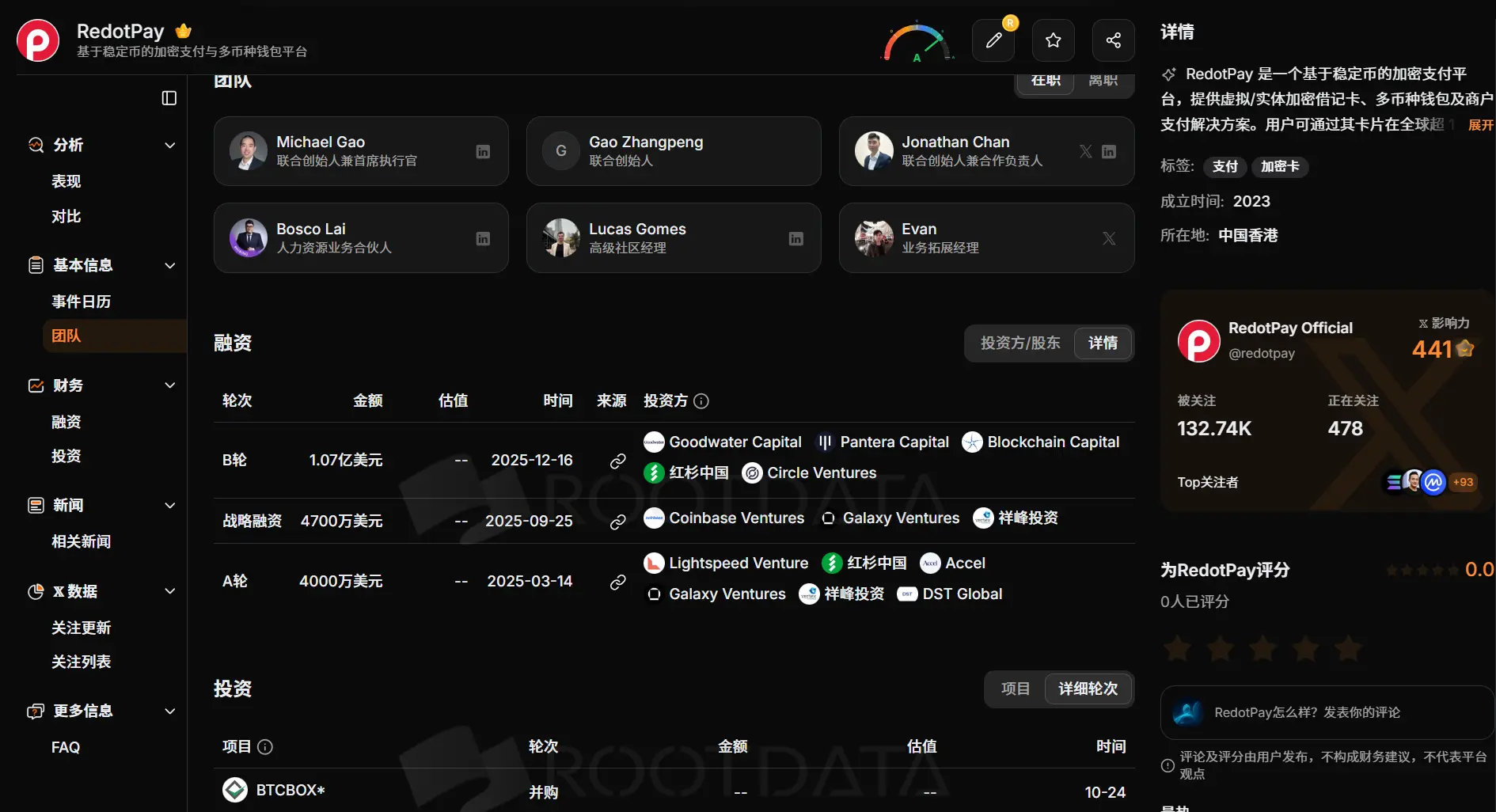
Image Source: [RootData](https://cn.rootdata.com/projects/detail/RedotPay?k=OTI3Mg%3D%3D&nt=financials_fundraising)
Recent reports indicate that JPMorgan, Goldman Sachs, Jefferies, and Barclays are involved in its IPO efforts, with Barclays' participation previously undisclosed.
Supporting this valuation is a set of impressive operational data. According to Bloomberg, citing informed sources, RedotPay currently has over 9 million customers, with an annualized revenue exceeding $180 million and an operating profit margin of over 50%. Revenue for the first three quarters of this year has grown by over 50% year-on-year.
At a $5 billion valuation, RedotPay's valuation is approximately 28 times its annualized revenue. If roughly calculated based on operating profit margin, the corresponding operating profit multiple is about 55 times, while the publicly listed stablecoin issuer Circle had a price-to-earnings ratio of about 50 times as of late October.
The impressive year-on-year growth is largely due to last year's low base. Data from cryptocurrency card data platform Paymentscan shows that RedotPay's card spending in the first three quarters of this year was approximately $3.08 billion, a growth of about 64% compared to $1.87 billion in the same period last year. In the first half of last year, its monthly spending was between $140 million and $220 million.
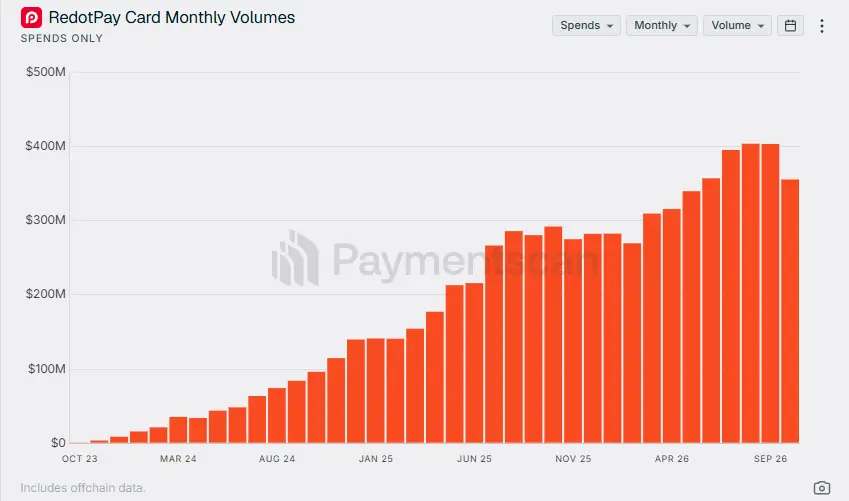
It should be noted that the card spending data for RedotPay on Paymentscan is self-reported by the company, while recharge data comes from on-chain tracking.
Looking at the recent months, both sets of data show that growth has stagnated. In September, RedotPay's on-chain recharge amount was $537.9 million, essentially flat compared to $534.4 million in August; card spending was $403.2 million, compared to $403.6 million in August.
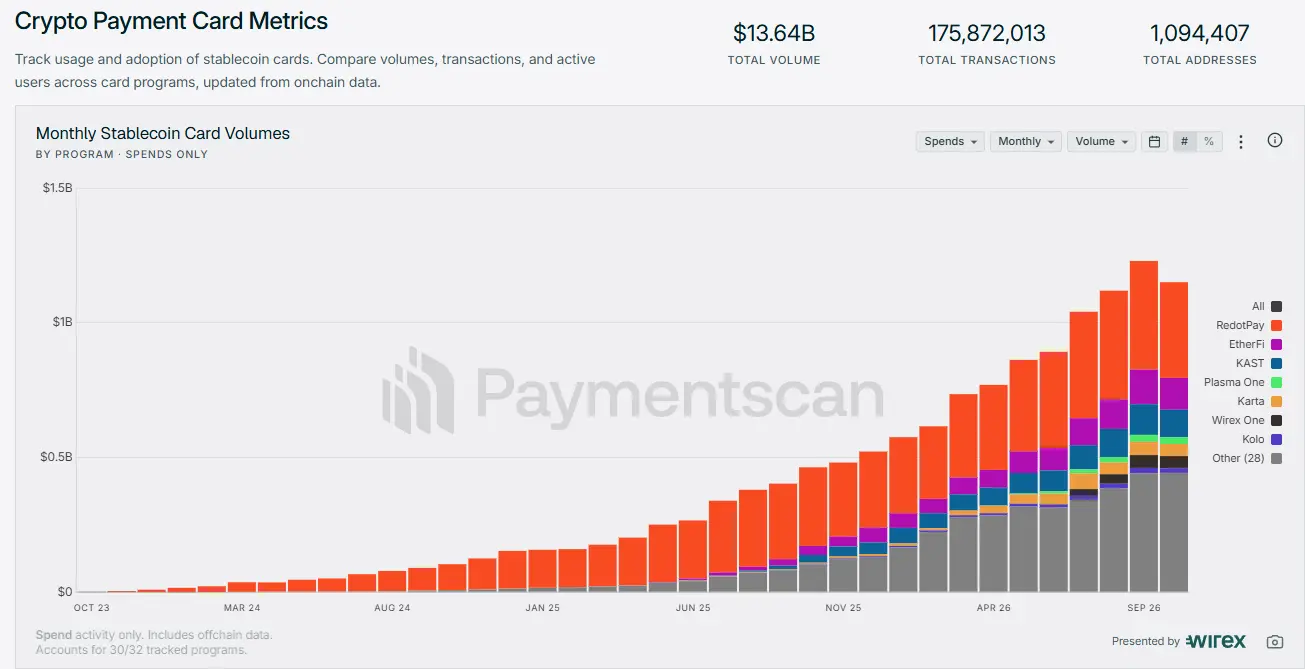
During the same period, competitors are still accelerating. Paymentscan's rankings show that RedotPay's spending growth over the past 90 days was 12.9%, while EtherFi and KAST grew by 42.5% and 35.5%, respectively.
Revenue growth has not kept pace with capital inflow. From November last year to August this year, RedotPay's monthly recharge amount grew by 68.4%, while the annualized revenue disclosed by the company only increased from $150 million to $180 million, an increase of about 20%. During this period, it also raised foreign transaction fees and ATM withdrawal fees. Whether the gap between the two is due to a decline in unit revenue or changes in non-card business is currently unclear from publicly available information.
### The Market is Expanding, RedotPay's Moat is Shrinking
In contrast to RedotPay's slowdown, the entire stablecoin card market is still rapidly expanding. Paymentscan data shows that in July this year, the monthly spending on cryptocurrency cards first exceeded $1 billion, nearly doubling compared to the same period last year, and further rising to approximately $1.23 billion in September.
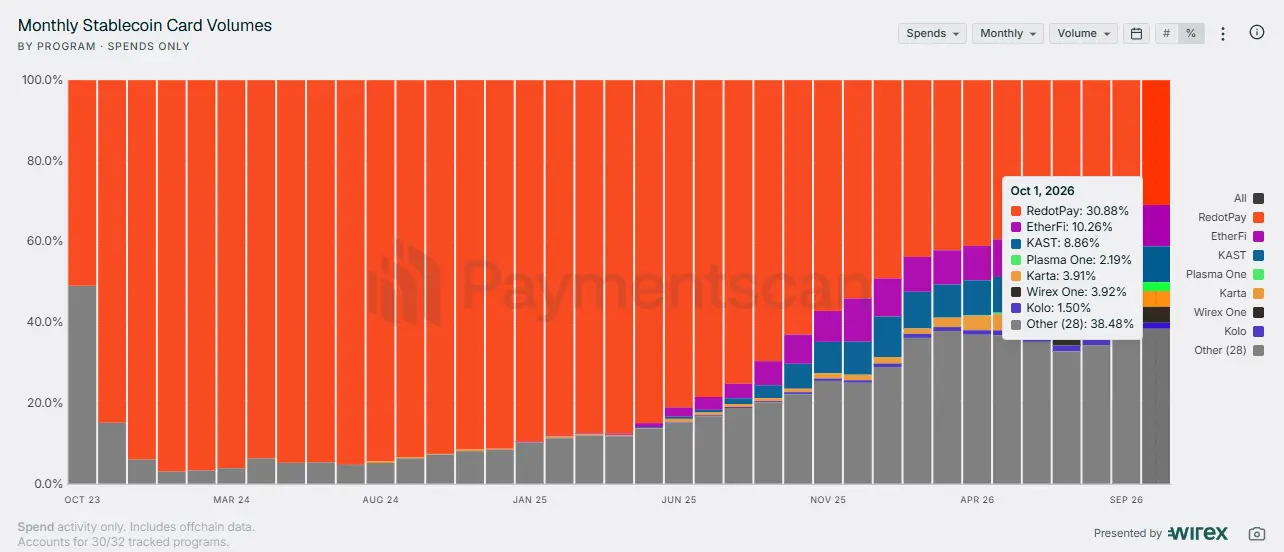
As the market grows, RedotPay's relative position is declining. Among about 30 card projects tracked by Paymentscan, RedotPay's spending share exceeded 90% in 2024 but fell to about 33% in September this year. During this period, its own spending continued to grow, with the change in share mainly coming from the rapid growth of newcomers like EtherFi, KAST, and Plasma One.
The ability of newcomers to catch up quickly is related to the lowering of issuance thresholds. Infrastructure provider Rain is a primary member of both Visa and Mastercard, providing card issuance services to over 200 companies, and completed a Series C financing round at a valuation of $1.95 billion in January this year. Brands connecting to such platforms can launch their card products in a relatively short time.
In contrast, RedotPay's advantages come more from its channels. ChainCatcher reported in January this year in the article “[How RedotPay Plans to Reach a Valuation of $2 Billion in Three Years](https://www.chaincatcher.com/article/2240813)” that RedotPay initially relied on an offline distribution network to acquire customers, promoting through local KOLs, OTC merchants, and community leaders in emerging markets like Nigeria, Brazil, and Southeast Asia.
Maintaining this channel is a higher fee and promotional incentives. According to publicly available information, RedotPay charges a $10 fee for virtual card issuance and $100 for physical cards. Paymentscan's tests show that the comprehensive markup when spending foreign currency is about 2.2% to 2.3%. Referrers can earn 20% to 40% of the card issuance fee as a reward, as well as a share of 0.05% to 0.25% of the transaction amount, with secondary referrers also able to participate in the distribution.
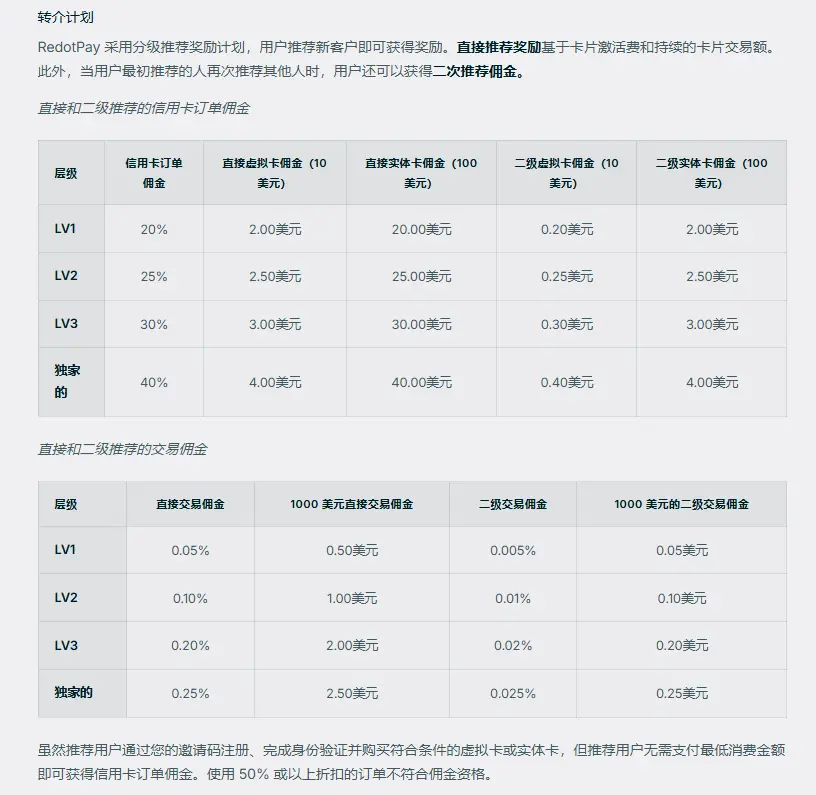
This means that channel costs have already been written into the business rules, and once fees are compressed in competition, the space for promotional incentives will also shrink. The platform also believes that RedotPay is more suitable as a bridge between stablecoins and local payment systems, as there are often more competitive options available locally for most users in the U.S. and Europe.
In July this year, Swiss payment platform Fiat24 suspended its cryptocurrency asset recharge function, and Paris startup Kulipa ceased operations due to debt issues, leading to the interruption of about 20 card projects from wallets and fintech companies. The rising costs of issuance, clearing, and compliance are pushing small and medium players out of the market.
### Beyond the $470 Million Lawsuit, RedotPay Has Compliance Issues to Address
In late October, RedotPay announced the acquisition of Japanese cryptocurrency exchange BTCBOX and acknowledged in the announcement that the company does not have a cryptocurrency trading operator license in Japan, and its existing services for Japanese residents do not comply with local regulatory requirements.
Currently, RedotPay has suspended new user registrations in Japan and will remove its app from local app stores, with existing services gradually restricted until terminated. The acquired BTCBOX had suspended all services in January this year due to customer information leaks and only resumed in phases in August, with transaction amounts undisclosed.
More attention is focused on the lawsuit with Binance. According to Bloomberg's report in August, citing Hong Kong court documents, an entity associated with Binance accused RedotPay of violating a cooperation agreement by diverting over 470,000 users from Binance Card to RedotPay, claiming $472.8 million from its three co-founders based on a lifetime value of $925 per user.
The core of the dispute lies in fund segregation. The agreement signed by both parties in March 2025 stipulated that funds from Binance Pay could not be used for recharging RedotPay cards. Binance claimed it discovered the breach in March this year and subsequently terminated the cooperation in April.
RedotPay denies the allegations and states it will actively defend itself; the Hong Kong case has yet to be resolved. It is reported that at least five executives have left RedotPay in the past year, including the head of legal affairs, who left the company in July this year.
In terms of licensing, RedotPay has indeed made significant progress this year. In March, it obtained a VASP license in Argentina and MSB registrations in Canada and the U.S.; in June, it completed VASP registration in Mexico; in August, it obtained its first state-level money transfer license in the U.S., with applications in over 20 other states under review; in September, it also obtained lending licenses in two states.
However, these new licenses mainly refer to the yet-to-be-launched U.S. business. RedotPay stated in August that its annualized revenue of $180 million and approximately $14 billion in annualized payment volume were completed through regulated payment processors outside the U.S., and its card products have not yet been launched in the U.S.
In September, RedotPay announced the completion of an [anti-money laundering review](https://www.chaincatcher.com/article/2292674) conducted by one of the Big Four accounting firms, but the review covered its two licensed subsidiaries in Hong Kong, with the standards based on the relevant guidelines from the Hong Kong Companies Registry.
In the card issuance segment, RedotPay's official website shows that its cards are issued by Xfers in Singapore under a Visa license, with RedotPay operating the card program as the project manager. This differs from companies like Rain that hold primary membership qualifications for card organizations, which raises concerns about reliance on external institutions.
Additionally, ChainCatcher previously mentioned that RedotPay's interest-bearing and lending businesses are in a legal gray area. Currently, these two businesses are still operational, and interest-bearing products are included in paid membership benefits, with no conclusive regulatory classification yet.
Overall, RedotPay's year-on-year growth remains impressive, but on-chain recharges and card consumption have leveled off in the past two months, and revenue growth has clearly slowed compared to capital inflow. New entrants in the sector are scaling up more quickly, and the restructuring of its Japanese business and unresolved lawsuits indicate that its compliance structure is still being adjusted.
Currently, RedotPay has completed a financial audit by one of the Big Four accounting firms. If it submits its application as planned before the end of the year, the public offering prospectus will disclose quarterly revenue, revenue composition, user geographic distribution, and litigation risks, which will be key to assessing this valuation.